
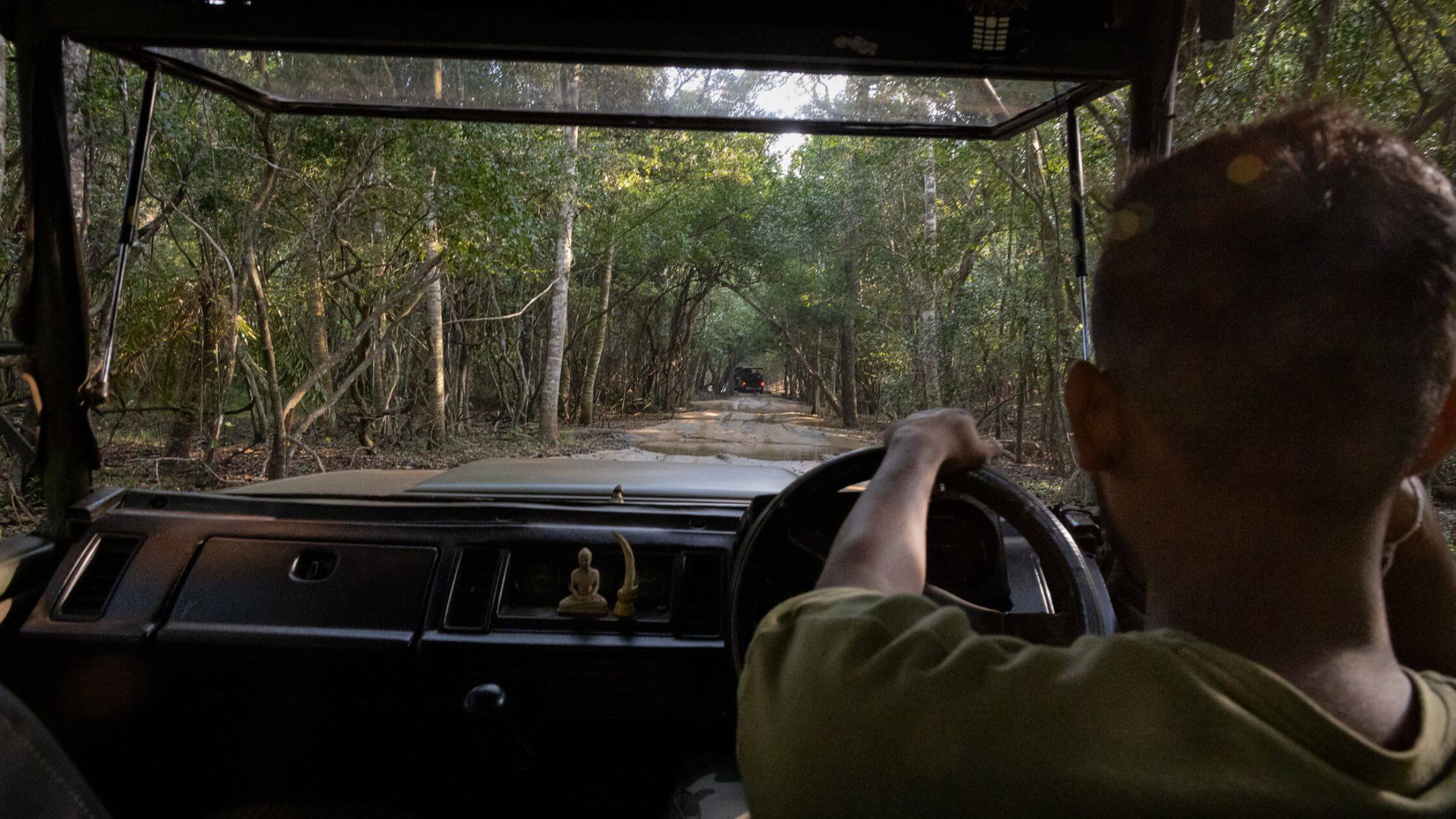

Those who want to go on safari in Sri Lanka are often tipped to visit Yala National Park. This is said to be the place to spot leopards in Sri Lanka. But did you know that Wilpattu National Park is at least as impressive, you can also spot leopards here and it is much quieter? This park, located in north-western Sri Lanka, is known for its vast landscapes, numerous lakes (the so-called “villus”), and the chance to admire wildlife in peace without having dozens of other jeeps next to you. So put Wilpattu National Park on your list and read our handy tips!
General information on Sri lanka
Are you planning your trip to Sri Lanka? Then check out our tips for the best travel period, daily budget and applying for a visa. Find all information on Sri Lanka here.
Why choose Wilpattu National Park?
Wilpattu National Park is Sri Lanka's largest national park, covering a whopping 1,300 km². Yet nowhere does the park feel crowded or touristy, and that's because it has been closed for years. Whereas Yala National Park sometimes has almost traffic jams from jeeps rushing towards the same leopard, Wilpattu offers a completely different experience: silence, space and fantastic nature.
This is because you will find not only dense jungles and open plains but also mangroves as well as the iconic villus: natural lakes that are a magnet for animals! This combination makes it the ideal safari destination and the reason we chose this national park.
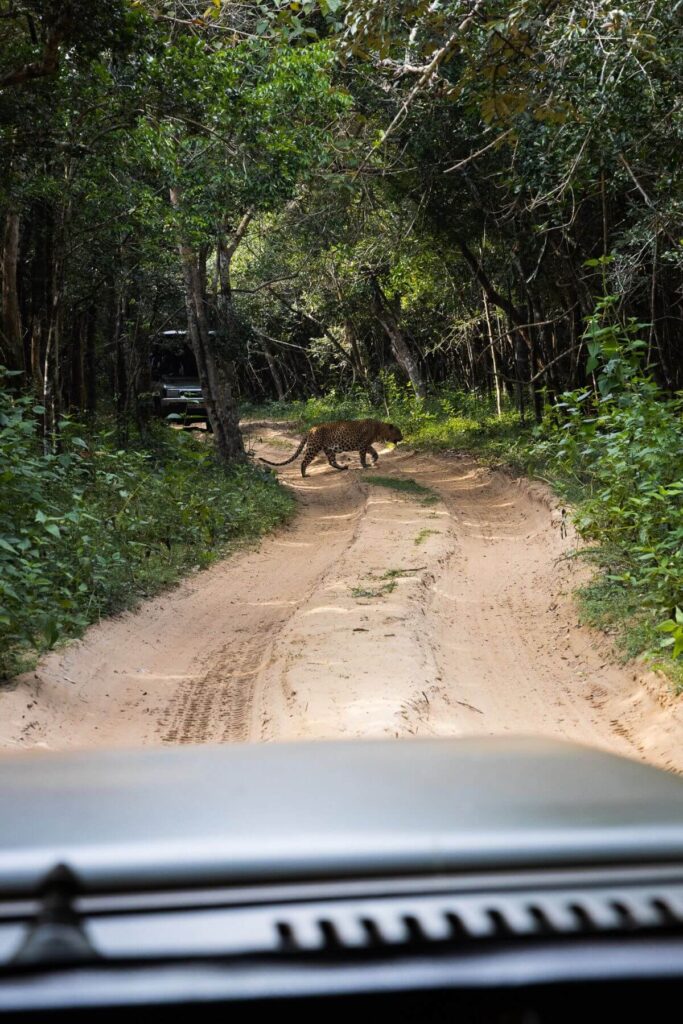
And yes! Here, too, you have a chance to win the famous Sri Lankan leopard to be seen. Indeed, Wilpattu National Park is known as the place with the largest population of leopards in Sri Lanka. Despite only a handful showing themselves to tourists (according to our guide), there is a chance that you will spot one. Of course, guarantees are never given but we were lucky during our safari!
Which animals can you spot in Wilpattu?
There are an awful lot of animals in Wilpattu National Park such as leopards, sloth bears, elephants and jackals. The real contenders during your safari are:
- Leopards: the pride of Wilpattu, though sometimes you have to be patient.
- Lip bears: one of the rarer animals, often spotted in the early morning.
- Elephants: smaller herds than in Udawalawe National Park or Yala National Park, but still special.
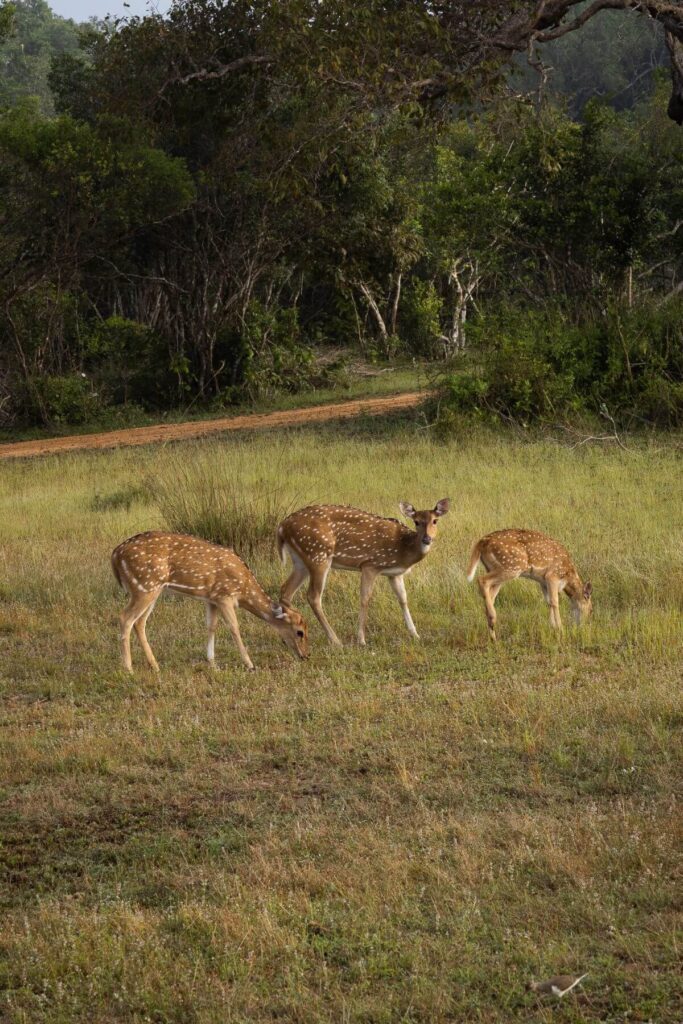
- Jackals, deer and buffalo: these animals are regularly seen walking along the lakes.
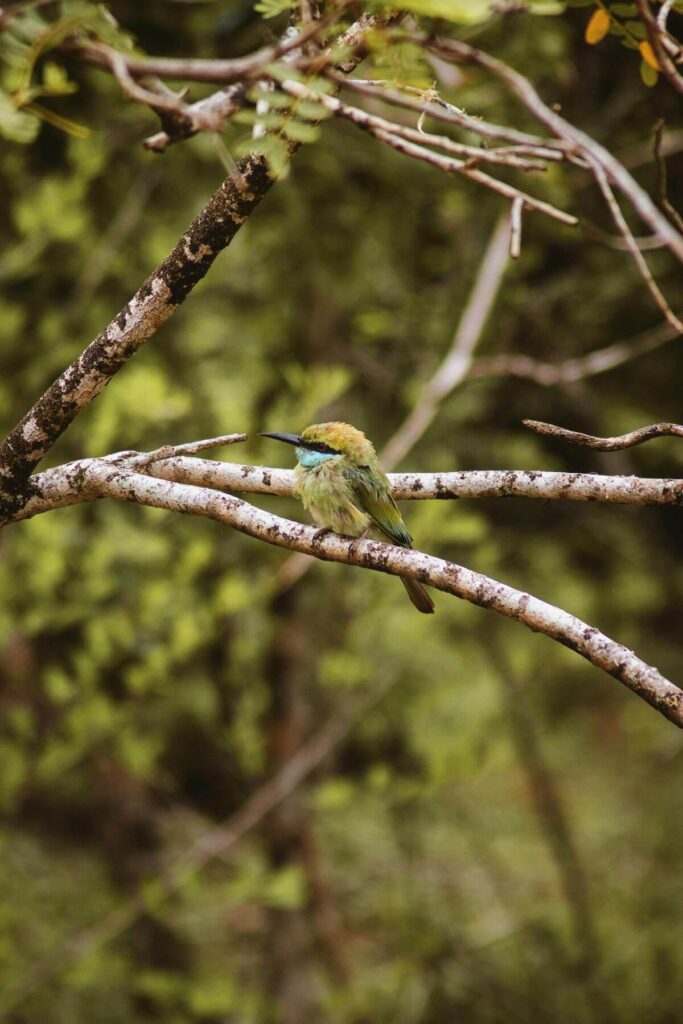
- Birds: from eagles to kingfishers and much more. Bird lovers are in the right place here!
Because the park is so big, it is obviously not possible to see all the animals. We asked our driver very specifically for the sloth bears (seen) and the leopard (seen). This means that you sometimes drive for a while without seeing any ‘special’ animals, but precisely because of this, the excitement is greater when a leopard suddenly emerges from the bushes!
 The animals in Wilpattu National Park are not fed. This means that sometimes you can be unlucky and not see certain animals. By indicating which animals you would like to spot, the driver knows where to pay extra attention. The drivers are in constant contact with each other via phones and signal when special animals have been spotted.

Cost of a safari in Wilpattu National Park
There are a total of two types of safaris to choose from:
- Half-day safari: From 06:00 in the morning to 11:00 (including lunch) or from 14:00 in the afternoon to 18:00.
- And all-day safari: From 06:00 to 18:00. During the full-day safari, you will stop regularly, get coffee and have a sumptuous lunch.
We opted for a half-day safari in the morning so that we could continue to Anuradhapura in the afternoon. For this morning safari, we paid a combined €135 (€67.50 per person) and had the jeep all to ourselves. This is quite exceptional; usually you share the jeep with two or more other travellers. Afterwards, we tipped the driver $10 (€8.50) which is customary.
 Good to know: a full-day safari is not that much more expensive namely €195 for two people. That's because the park entrance fee remains the same.
Where do you book a safari in Wilpattu National Park?
Now that you have an idea of prices, it is useful to know where to arrange a safari. Often you can book this very easily through your accommodation. You will then be picked up early in the morning or later in the afternoon and brought back afterwards, which is incredibly practical. That's how we did it ourselves. Would you rather plan ahead or have a tight schedule? Then you can also easily book your safari online, booking the jeep and guide in advance.
→ Easily book your safari in Wilpattu National Park here
How to get to Wilpattu National Park?
Are you touring Sri Lanka southwards, like us? Then Wilpattu National Park is a great first stop! After all, as far as we are concerned, a safari is absolutely part of your travel experience!
From Negombo do you do with a tuktuk such a five hours over to reach the park. Travelling through Sri Lanka with your own tuktuk? Then we recommend picking up your Tuktuk as early as possible (around 9:00am), so that you can reach your accommodation near Wilpattu National Park well before sunset.
Tip: Like us, do you want to travel like a local? Then hire a tuktuk via tuktukrental.com! This is highly recommended and an experience you won't soon forget. And extra fun we were able to arrange a discount for you! Click on the link above and our discount code ‘THOUSANDTRAVELMILES‘ is applied automatically. Handy isn't it?
Another convenient base for visiting Wilpattu is Anuradhapura. From here, you can reach the park entrance within an hour.
We stayed at Wilpattu Wildhideaway and arranged our safari directly through this accommodation but you can also book it in advance through GetYourGuide. Just keep in mind that for a morning safari or a full-day tour, you need to set off early. This is because it is precisely in the early morning that the animals are most active and the chances of seeing them are highest.
Best travel time for Wilpattu National Park
The park can be visited all year round, but the best travel time is from February to October, with a peak of visitors in April and May. This is because these popular months are drier and many animals gather around the lakes, making it easier to spot them.
From November to January, there is often more rainfall, making some roads less passable and parts of the park inaccessible.
Safari in Wilpattu: what to expect?
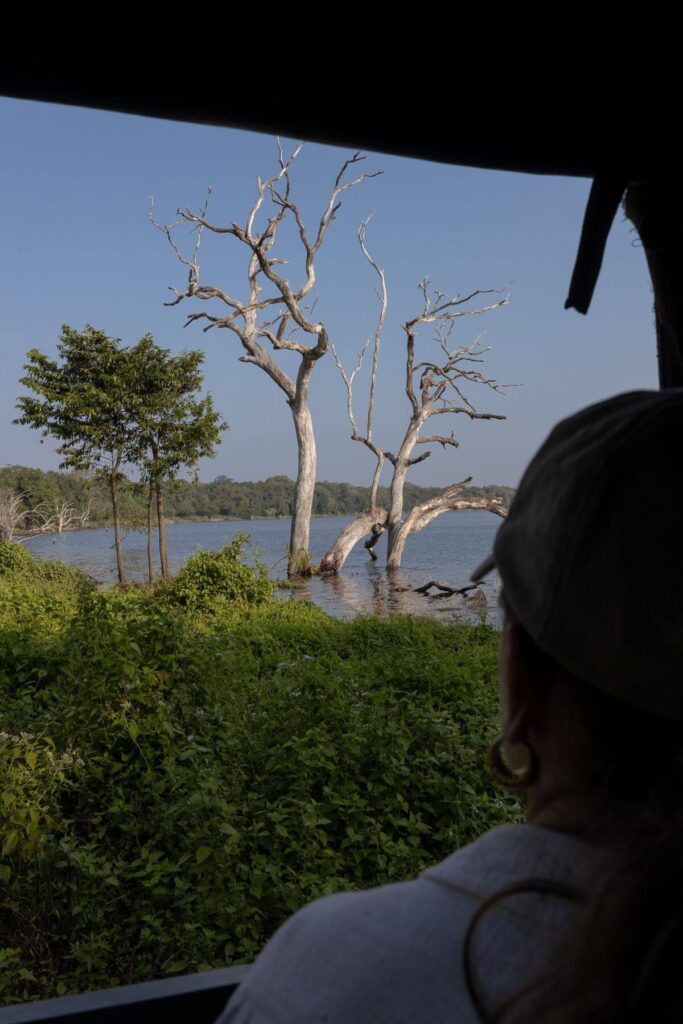
Wilpattu National Park is not only Sri Lanka's largest park but also the country's oldest national park (1938). Thanks to its varied landscapes, Wilpattu is a paradise for nature lovers who want a safari experience that still feels a lot more peaceful and authentic than in Sri Lanka's better-known parks. But what can you expect?
 Note: We cannot repeat this often enough. They are still wild animals so you have no guarantee of seeing animals. During our safari, for instance, we did not see elephants but we did see a leopard and a sloth bear.
Jeep safari and safari options
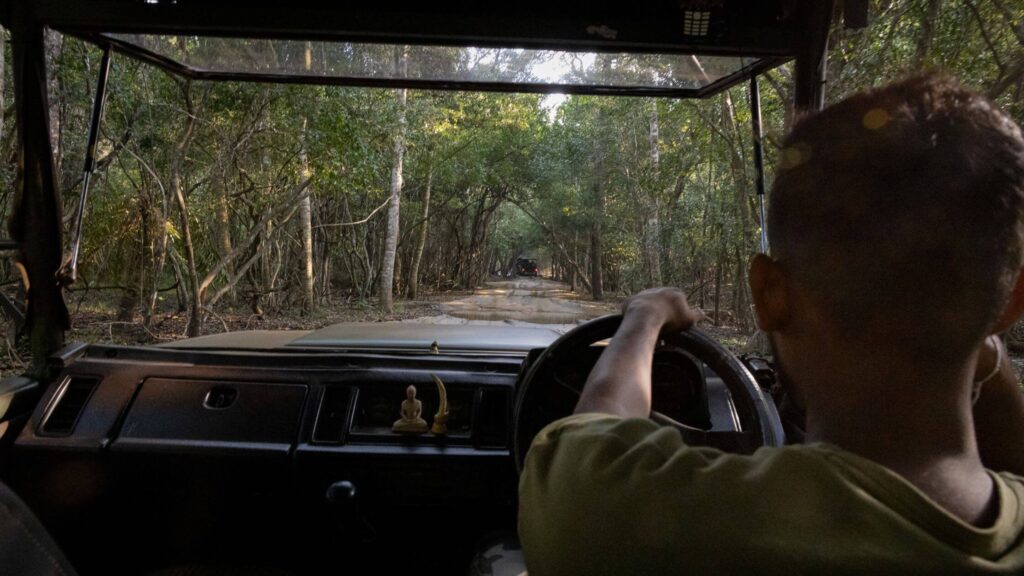
A safari in Wilpattu National Park is done in a 4×4 jeep with a local guide. You can opt for a morning safari (from 6:00am), afternoon safari (from 14:00) or a safari of a all day. Especially in the morning, you are more likely to see animals as they are still active. We therefore recommend you opt for the morning safari or the all-day safari!
Our experience in the park
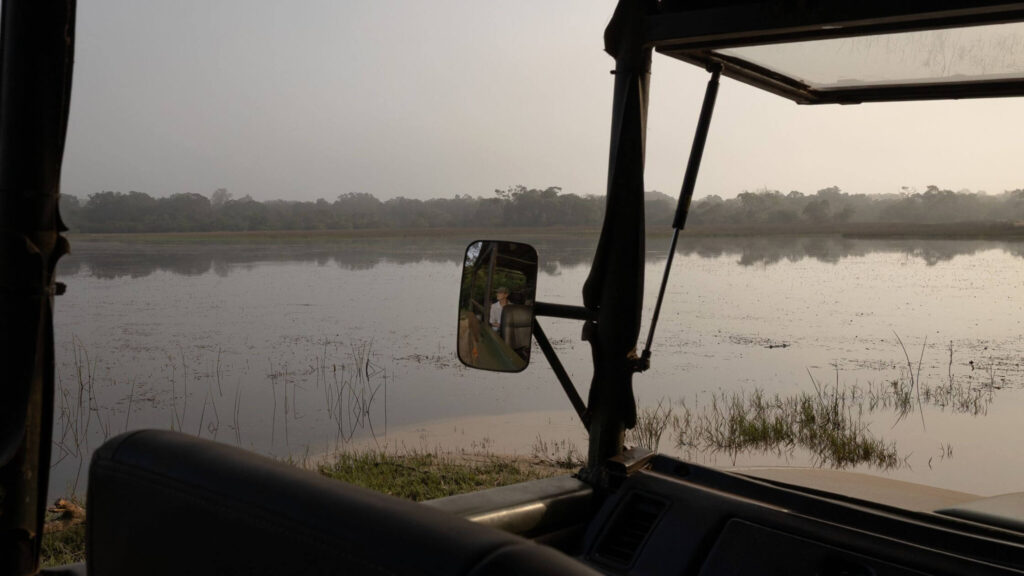
We found one of the biggest pluses of this park to be its tranquillity. We were at most 10 other jeeps at the entrance in the morning and drove complete stretches alone, something almost unthinkable in Yala National Park. For us, this made the experience even better!
If you go via Wilpattu Wildhideaway book this accommodation, you can be sure that you will get binoculars, a simple but good lunch and that you will go out with an experienced guide. You can arrange a safari through this accommodation very easily via the chat of Booking or via Instagram. Our guide didn't tell us much about the park itself, but he was determined to find the animals on our wish list. As soon as an animal was spotted somewhere, he quickly drove there so we didn't have to miss anything.
 Tip: Want to have a choice of several safari tours and guides? Then take a look at Getyourguide. You can choose from many different tours here and read instant reviews.
Practical tips for your visit
In addition, there are some practical tips we want to share so that you are prepared to hit the road!
- Bring binoculars or ask here: some animals you see from afar.
- Protect yourself from mosquitoes: make sure you bring mosquito spray or a long-sleeved shirt.
- Choose an experienced guide: their knowledge and eyes really make a difference in the park.
- Start early: the chances of seeing leopards and sloth bears are highest then.
- Respect nature: always stay in the jeep, listen to your guide and keep your distance from the animals.
In addition, bear in mind that anything you bring or wear will get dirty and dusty and there are only a few places in the park where you can go to the toilet.
Read also: What to do in Kandy, Sri Lanka? Discover 6x the best tips!
Read also: Sri Lanka travel itinerary: complete itinerary for 2, 3 or 4 weeks
Where to stay near Wilpattu?
As already indicated, we recommend staying in the Wilpattu area. Fortunately, this is not complicated and there are several options, ranging from simple guesthouses to comfortable lodges. We often book our accommodations last minute and therefore always set out a few favourites in our Booking.com lists. These were our favourites for Wilpattu:
- Wilpattu Wildhideaway: We stayed here. This is a simple but nice and budget-friendly accommodation near the park. As there are not many restaurants in the area, we also arranged dinner here for the first evening. Super tasty and mega!
- The Backwaters Lodge: This is an absolutely great place to stay, even if it is a bit pricier. Unfortunately, it was fully booked with us, so make sure you book in time if you want to stay here. You will stay in a lodge equipped with all mod cons, including a private bathroom and air conditioning.
- Big Game Camp Wilpattu: This accommodation is located on the edge of the national park. You will stay here in simple tents surrounded by nature. It is about 7 km from the park entrance and only 500 metres from the park boundary.
- Ceylon Resort Wilpattu: An accommodation with a lot of good reviews. The rooms are clean and if the reviews are to be believed, they help you with everything!
Plan your trip with our Sri lanka map!
Plan your ideal itinerary through Sri Lanka with our handy Google Maps map. Discover the best local eateries, iconic sights and hidden gems. With this map, you'll have all hotspots at your fingertips and won't miss a single highlight of this beautiful country.

Frequently asked questions about Wilpattu National Park
How big is Wilpattu National Park?
Wilpattu is Sri Lanka's largest national park and is over 1,300 km². That makes it almost twice the size of Yala. Thanks to this size, the park feels peaceful and pristine, and you often feel like you have nature all to yourself.
Which is better: Yala or Wilpattu National Park?
It depends on your preference. Yala is busier and known for its relatively high chance of seeing leopards, but you often share that experience with dozens of other jeeps. In Wilpattu, the chances of seeing leopards are also high, but the experience is much quieter. If you are looking for authenticity and silence, Wilpattu is a better choice.
How much does a safari in Wilpattu cost?
We assume the price we paid.
Half-day safari: €135 (€67.50 per person), including guide and admission.
Full-day safari: €195 (€97.50 per person), including guide and admission.
How much time do you need for Wilpattu National Park?
A half-day safari is often enough to get a good impression of the park, especially if you mainly want to spot animals. If you want to explore the park more extensively, spot more animals (or have greater chances) and really experience the peace and quiet, a full day or even two days is recommended.
Can you drive yourself in Wilpattu National Park?
No, you are not allowed to enter the park with your own car. You always visit Wilpattu with a jeep and guide. This is not only safer, but also much more interesting: the guide knows exactly where the animals can often be found and can tell a lot about the wildlife.
What are the chances of seeing leopards in Wilpattu?
The chances are good, as Wilpattu has the largest population of leopards in Sri Lanka. Still, it remains wildlife, so you never have a guarantee. Generally, you have the best chances in the early morning.
How do you combine Wilpattu with other destinations in Sri Lanka?
A popular route is to travel to the park from Anuradhapura or Sigiriya, or directly from Negombo. View our complete Sri Lanka itinerary here To get a good impression.
Do we think Wilpattu National Park is worthwhile?
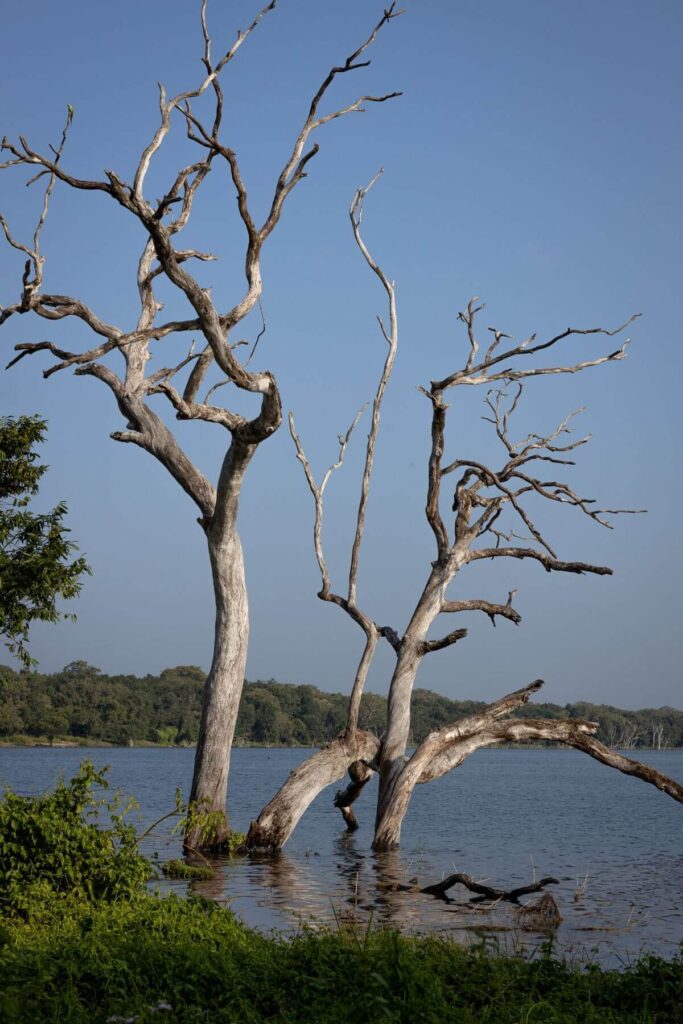
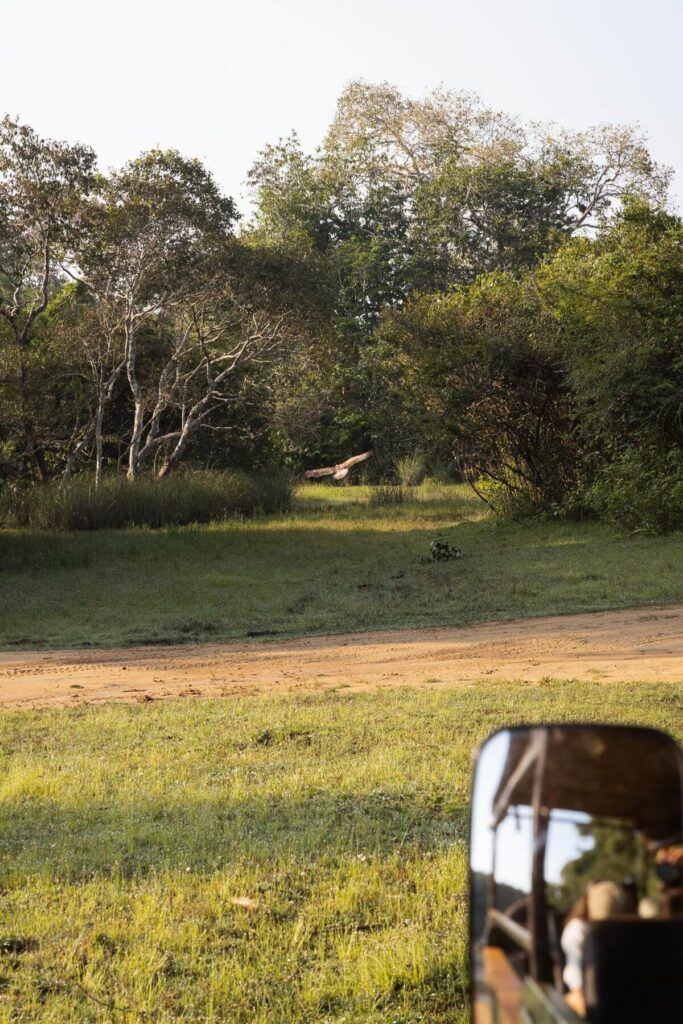
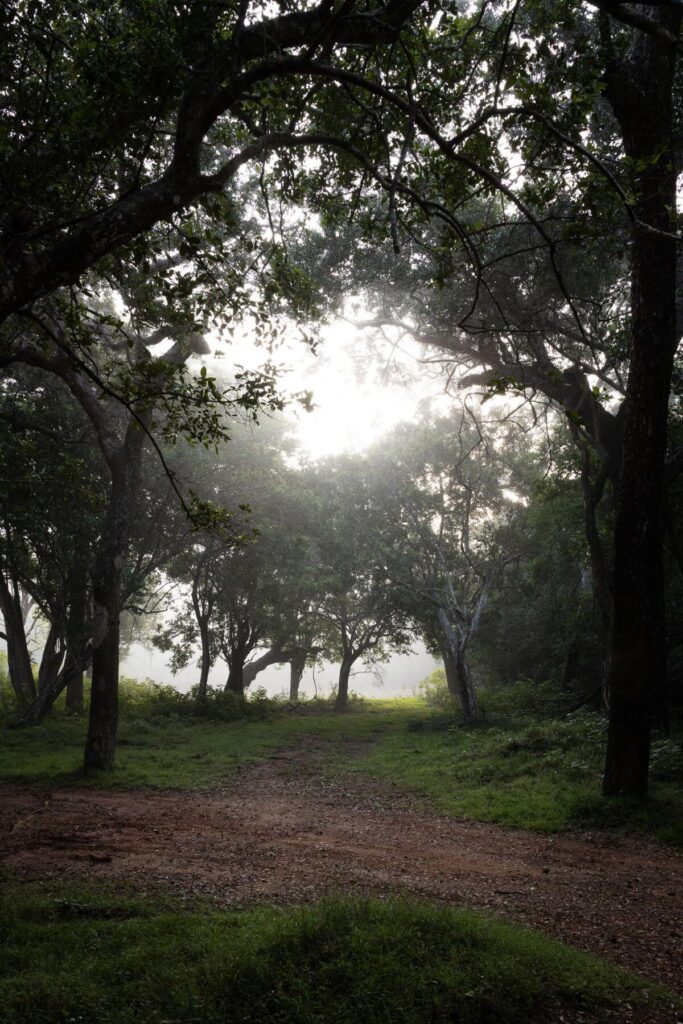
Without a doubt: yes! Wilpattu National Park offers a safari the way you want to experience it. It is the place to spot the Sri Lankan leopard without hordes of other jeeps around you, and at the same time you will discover a huge variety of nature and wildlife. Whether you are a seasoned safari-goer or visiting a wildlife park for the first time, Wilpattu is highly recommended and a destination not to be missed during your trip through Sri Lanka.
We hope these tips help you plan your trip. Do you still have questions? Then feel free to drop us a line at Instagram.
We try to keep this blog as up-to-date as possible but this cannot be done without your help. If anything has changed, please let us know via info@thousandtravelmiles.nl.
Some of the links in this blog are affiliate links. If you choose to make a purchase through these links, we receive a small commission at no extra cost to you. By using these affiliate links, you support Thousandtravelmiles. This allows us to roam the world, fund the website and offer you free information for planning your trip. This means a ‘real’ person does a little dance of joy when you make a purchase through this link! You're a legend!