Planning to explore Scotland and looking for a great itinerary? Then you've come to the right place! In this itinerary, we take you through some of the country's coolest spots, from vibrant cities like Glasgow and Edinburgh, to breathtaking natural parks like the Cairngorms and an ultimate road trip along the North Coast 500. With this itinerary, in three weeks you will experience a trip that truly has it all: rugged mountains, emerald lakes, historic castles and atmospheric villages. This is how you discover the versatility of Scotland in one adventurous trip. Discover our tips and travel well-prepared!
General information about the United Kingdom
Are you planning a round trip to the UK? Then check out our tips for the best travel period and daily budget. You can find all information about United Kingdom here.
How many weeks do you need for this round trip Scotland?
Scotland is a beautiful country with endless opportunities to explore. Thanks to the many islands surrounding the mainland, you can easily travel around for a month or more.
Would you like to explore the mainland as well as take a trip to one of the island groups? Then, in our opinion, you need at least 3 weeks needed.
Have less time? No problem. Then focus on Edinburgh, the Cairngorms and a bit of the North Coast 500, so you can still get a good impression of the country!
Want to combine Scotland with a tour of England? We have created an itinerary for that too. England is at least as vast, so for this combo we recommend at least 5 to 6 weeks.
Day-to-day overview of our trip
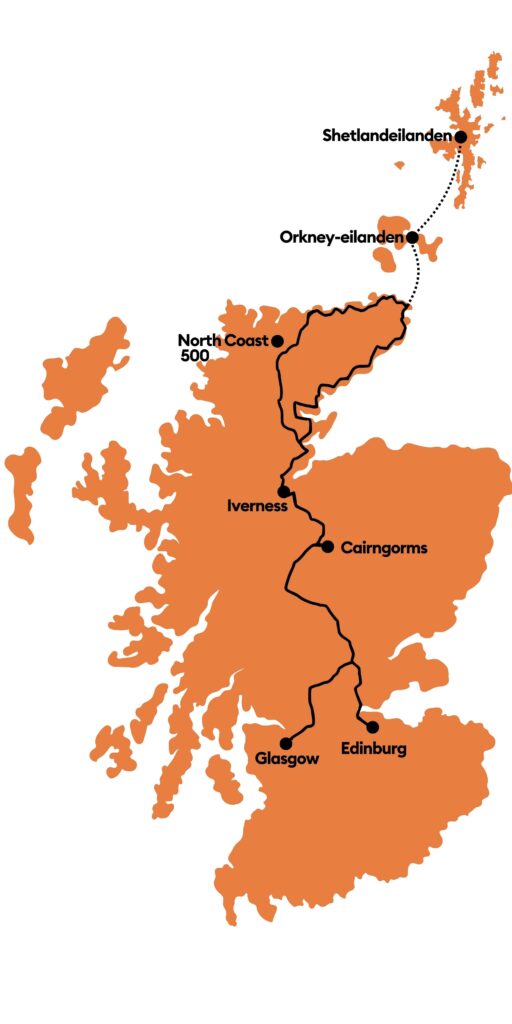
To give you a good idea of what our trip looked like, we have created an overview below. This will help you get an idea of the pace of travel, how many nights we stayed in each place and how you can keep a nice balance between travelling and relaxing. Use this schedule as inspiration and adapt it to your needs and available time!
Day 1: Arrival Newcastle
Day 2: Travel to Edinburgh (incl. stops)
Day 3: Edinburgh
Day 4: Edinburgh
Day 5: Edinburgh
Day 6: Cairngorms
Day 7: Cairngorms
Day 8: Cairngorms
Day 9: North Coast 500
Day 10: North Coast 500
Day 11: North Coast 500 & Crossing to Orkney
Day 12: Orkney
Day 13: Orkney
Day 14: Orkney and (night) boat to Shetland
Day 15: Shetland
Day 16: Shetland
Day 17: Shetland
Day 18: Shetland and (night) boat to Orkney
Day 19: Via Flow Country to Inverness
Day 20: Via Inverness to Glasgow
Day 21: Glasgow
Day 22: Glasgow
Day 23: Travel to Newcastle and night boat back to the Netherlands
Starting or ending your itinerary in Edinburgh
From the arrival port of North Shields, near Newcastle, it is about a 2.5-hour drive to Edinburgh. This drive already takes you past beautiful scenery, and it is definitely worth taking a small diversions on the way there or back!
For example, drive through the Steel Rigg Car Park and take a walk to Sycamore Gap. This iconic spot is in the middle of the centuries-old Hadrian's Wall. Although the famous tree has since been cut down, the view over the valley and the historic Roman wall remains impressive.
Have less time but still want to stretch your legs? Then make a short stop at the Northumberland National Park. You will find cool viewpoints, green hills and quiet hiking trails, this is the perfect place to catch your breath before driving to Edinburgh.


The best way to travel to and through Scotland
There are several ways to explore Scotland. Whether you want to travel by car, motorhome or train, each option has its advantages. We share our experiences and tips below.
Tour Scotland by car or motorhome - Our favourite!
In our opinion, the best way to travel around Scotland is by private transport. This gives you maximum freedom to decide where to go and how long to stay in one place. Especially remote sights, which are common in Scotland, are easiest to reach this way.
Campsites: Thanks to its vast nature, there are an awful lot of beautifully located campsites. A camping holiday is therefore ideal, also because hotels are often pricey. During the summer holidays, we paid around €30-€35 per night for a camping pitch and €80-€100 for a mid-range hotel.
 Tip: A campervan or rooftop tent on your car is perfect for a road trip. The great thing about Scotland is that you can wildcamp here. So you can get out into nature! Apps like Park4Night help you find the best spots.
Tour Scotland by train
Travelling by train across the UK, and therefore Scotland, is also a fantastic alternative if you prefer not to travel by car or motorhome. You will find stations even in the smallest villages and deep in nature reserves. Several buses go from each station, making most places easily accessible.
So although you do have a little less flexibility, on the other hand, you can simply stare out of the window all day. A perfect way to enjoy the beautiful landscapes! Check out the options on NSInternational.
Tip: Our bucket list still includes crossing the entire UK by train one day. If you want to do this too, we recommend a Interrail pass to take, otherwise it is very expensive.
How to get to Scotland?
Anyone travelling by train buys a ticket and goes to the station. Simple! But if you go to Scotland by private transport, you have several options. Arrival and departure locations, journey times, frequency and price vary enormously, so it's important to find out what suits your trip best.
If you go to Scotland by private transport then the crossing from IJmuiden to Newcastle the best option in many cases. Booking a cabin with this night boat is compulsory. As a result, the price is quite high. The provider DFDS regularly has early booking discounts, so keep a close eye on these. It also matters whether you travel in a holiday period or on weekends. Prices depend on several factors, but definitely keep in mind a few hundred euros. The more flexible you are, the cheaper this option can become. Should you consider travelling to Scotland via England. Then check out our England itinerary for the different crossing options.
IJmuiden - Newcastle (DFDS Seaways)
Travel time: +/- 16 hours
Price: From €150 for a one-way trip with a car and driver. A cabin is mandatory
Handy: Ideal if you want to start in the north of England or Scotland. Book early for discounts, especially in holiday periods.
Around Scotland - Our route
Now that you know how to get to Scotland and the easiest way to get around there, it's time to share our itinerary with you! Here, we are assuming the boat to Newcastle as the start and end point. Starting your trip somewhere else? No worries: grab the map and adjust the route to suit your plans.
1. Edinburgh
Edinburgh is a beautiful historical city, with impressive architecture, cosy cafés and a wide variety of restaurants. So take a lovely stroll around; you'll come across plenty of beauty. An iconic place to visit is the fairytale-like Dean Village, which looks a bit Harry Potter-esque. But there is much more to explore, including climbing an ancient volcano in Holyrood Park, exploring the still quiet but hip district of Leith, and admiring an extraordinary feat of bridge construction at the Forth Bridge. In other words, the perfect place to start or end your tour of Scotland. Curious about what there is to do? Check out all our tips for Edinburgh.
 Travel time from the arrival port of North Shields, near Newcastle, to Edinburgh is about 2.5 hours by car

2. Cairngorms
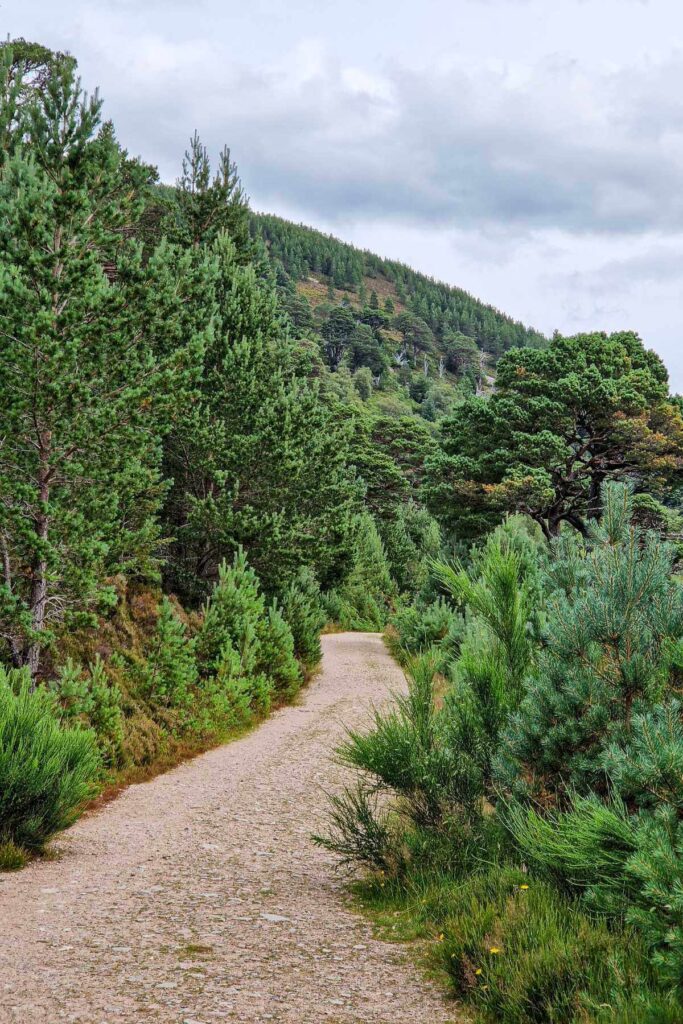
When you think of Scotland, you probably immediately picture the Highlands: rugged mountains, vast hills and deep valleys in a colour palette of green, orange and purple. Once you are in the middle of this landscape, it feels as if nature completely embraces you. The Cairngorms National Park is the epitome of this and undoubtedly one of the highlights of this route.
Explore the heart of Cairngorms National Park
Are you a seasoned hiker? Then this is the place to be. The park offers numerous challenging hiking trails, where you can stay overnight in a bothie, a wooden cabin in the middle of the wilderness. Bothies are free, but as a result they fill up quickly. So always make sure you have an alternative. You can easily find the bothies via Google Maps.
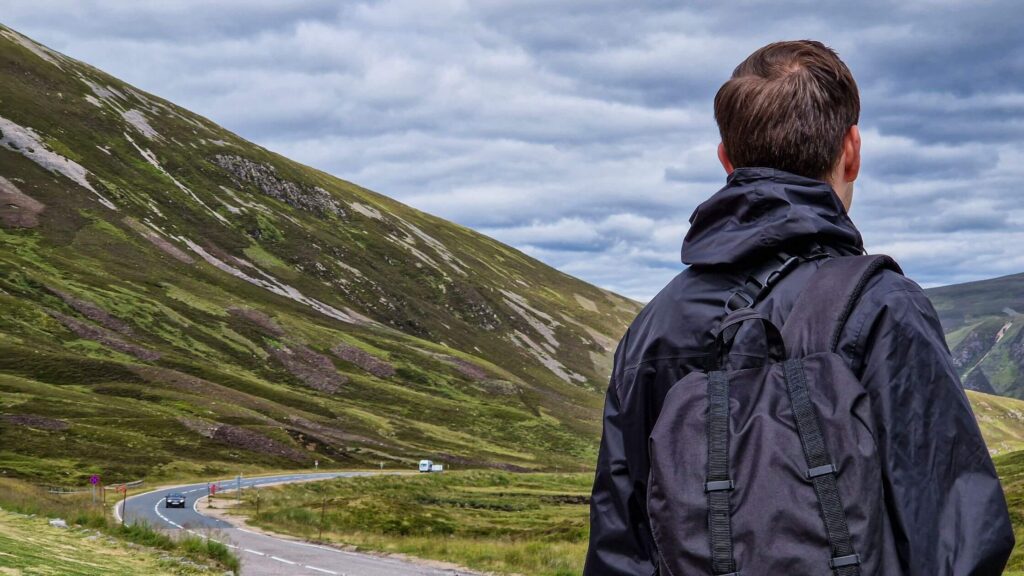
If you are less fanatical, like us, there are also shorter walks available or you can take the car to the Old Military Road which runs right through the park. On the way, you can stop each time at a nice viewpoint, for example at the Glenshee Ski Centre.
A nice stop in the middle of the Cairngorms is the charming town of Braemar. It is just about the only town in the area, so perfect for refuelling. Highly recommended is The Bothy Braemar, where you can enjoy delicious lunches and cakes. The area around Braemar used to be a favourite of Queen Victoria and Elizabeth. Want to follow in their footsteps? Then take a walk along Linn's Dee or visit Balmoral Castle.
 View here all tours and activities in and around the Cairngorms National Park via GetYourGuide.
Discover Aviemore's rich environment
The western side of Cairngorms has a lively atmosphere, especially around Aviemore. This is because of the many activities you can do here, from various water sports to beautiful walks. Highly recommended is the Cairngorm Mountain up and take a walk from there, or the Glenmore Forest at Loch Morlich to explore. Do you follow the route from the visitor centre? Then you will walk a route with breathtaking views of the surrounding area and arrive at the emerald green An Lochan Uaine, one of our favourite walks!
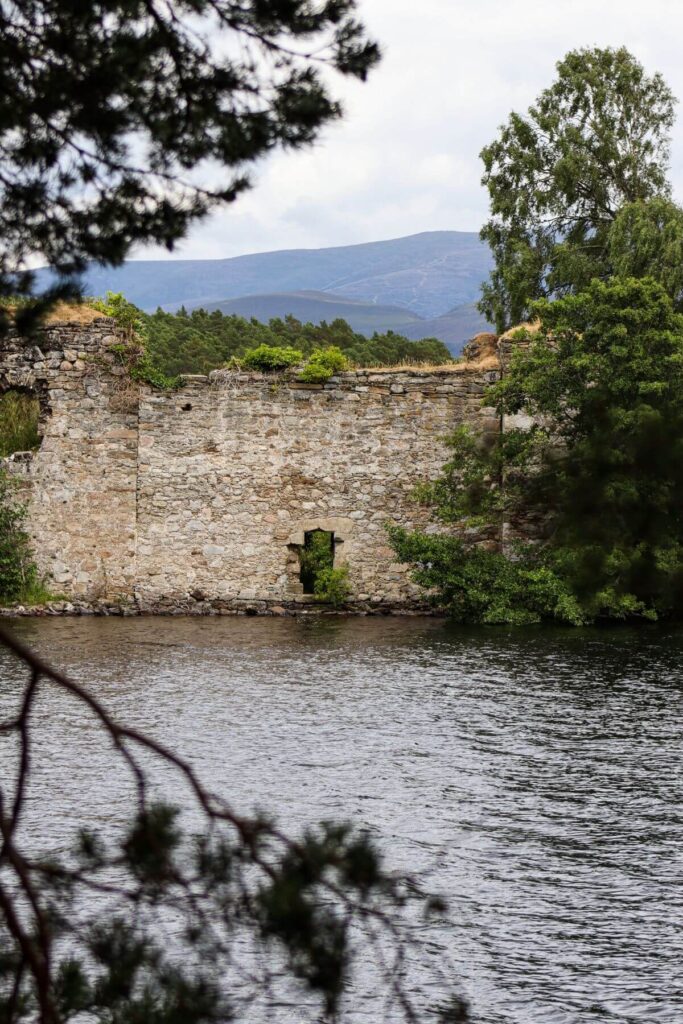
A visit to Loch an Eilein and Uath Lochans should not be missed. Loch an Eilein is a lake with a mysterious ruin in the middle of the water, while Uath Lochans consists of three lakes that are best admired by following the red path. This path leads you to an insane viewpoint over the lakes. For a delicious lunch, visit the nearby Old Post Office Cafe Gallery, a perfect stop to take a break.
View here all tours and activities in and around the Cairngorms National Park via GetYourGuide.
Travel time from Edinburgh to the Cairngorms is about 2 hours by car, depending on where you stop first.
3. North Coast 500
The North Coast 500 is, as the name suggests, a (more than) 500-mile route along the north coast of Scotland. This road trip is known as one of the most beautiful in the world, and for good reason: you drive past impressive, rugged coastlines, the azure sea and white sandy beaches that you would hardly expect in this part of the world. The route is clearly marked with brown signposts leading you to the most beautiful sights. For a complete overview of all stops, please visit the official North Coast 500 website.
Tips for the eastern part of the North Coast 500
The western part of the North Coast 500 often attracts all the attention because of its rugged beauty, but the eastern part also has a surprising amount to offer. Due to lack of time, we only did the ‘boring’ eastern part, but this allows us to make this part of the route more enjoyable for you with our tips!
This is how we discovered the idyllic, somewhat hidden Embo Beach, one of the most beautiful beaches we have ever been to. This beach has even been voted the most beautiful in the UK. Oddly enough, it is not officially part of the route, so you often have it all to yourself.
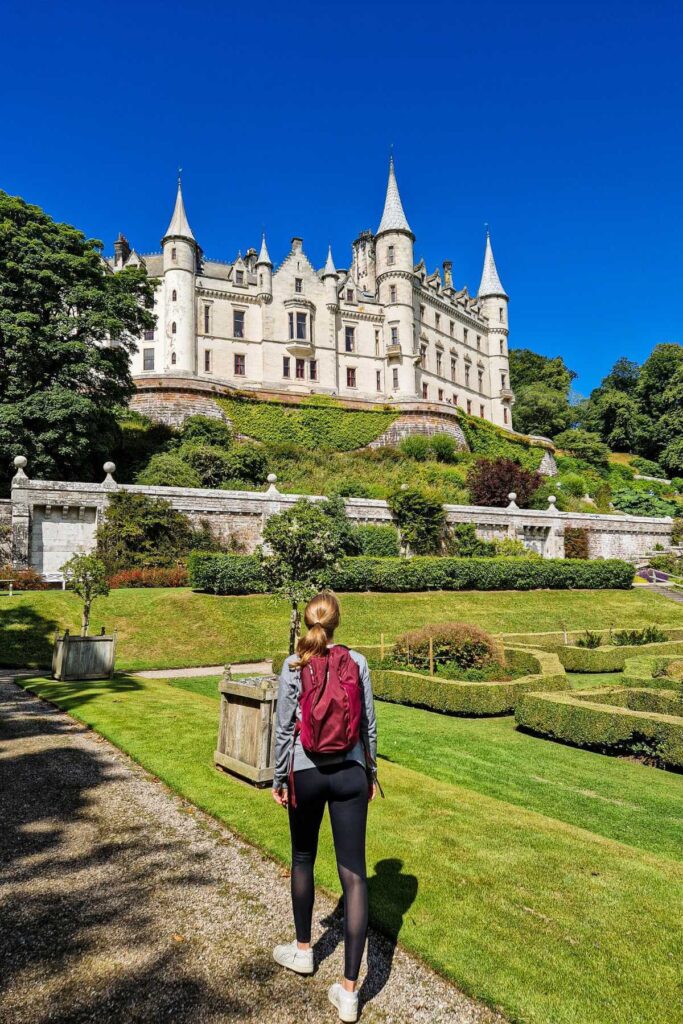
Another must-see on the east coast is Dunrobin Castle, which is actually more of a country house, right on the coast. Unlike many other castles in the UK, a ticket here is relatively affordable, around £16 (€18.53). So a visit is well worth it.
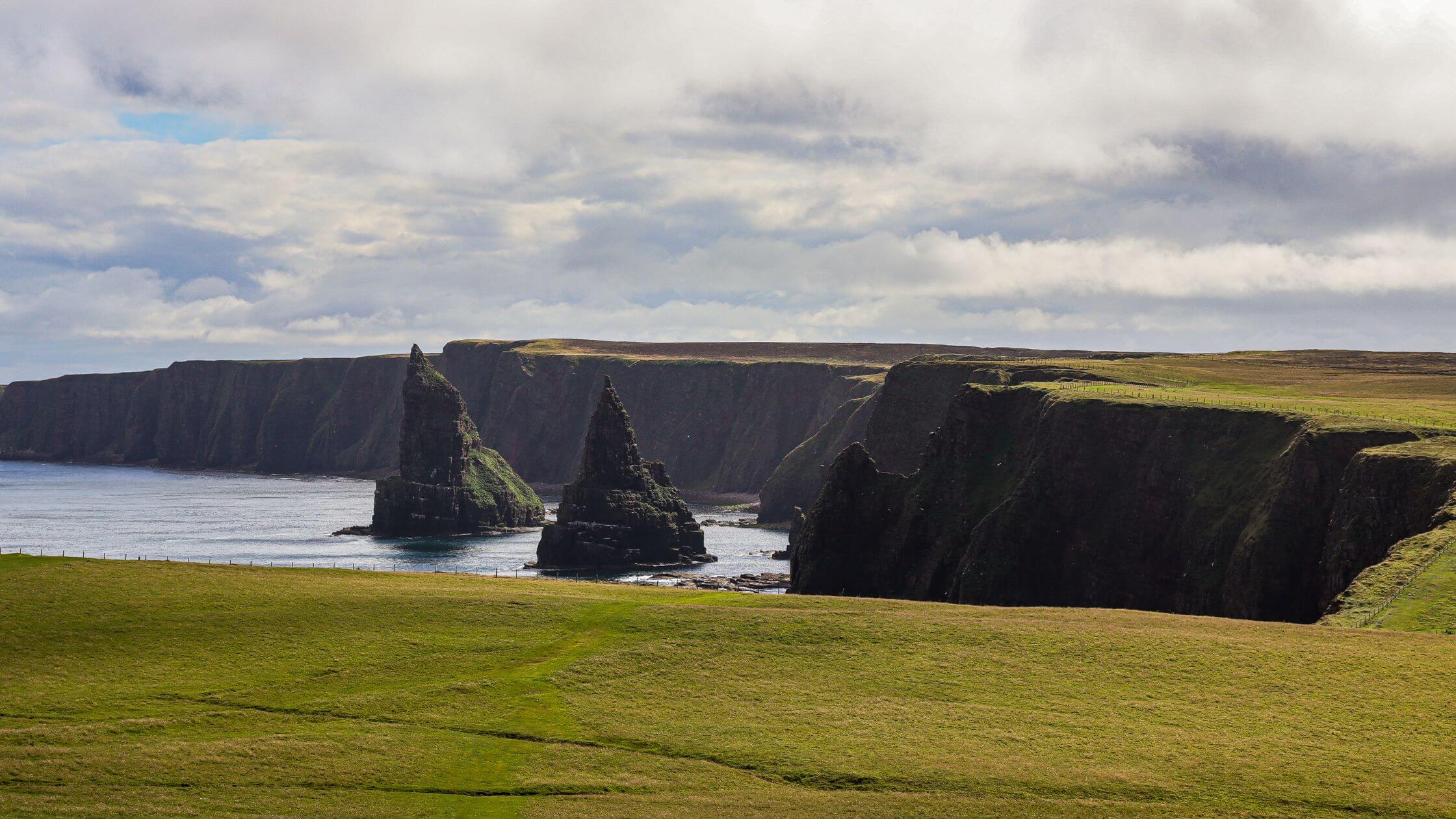
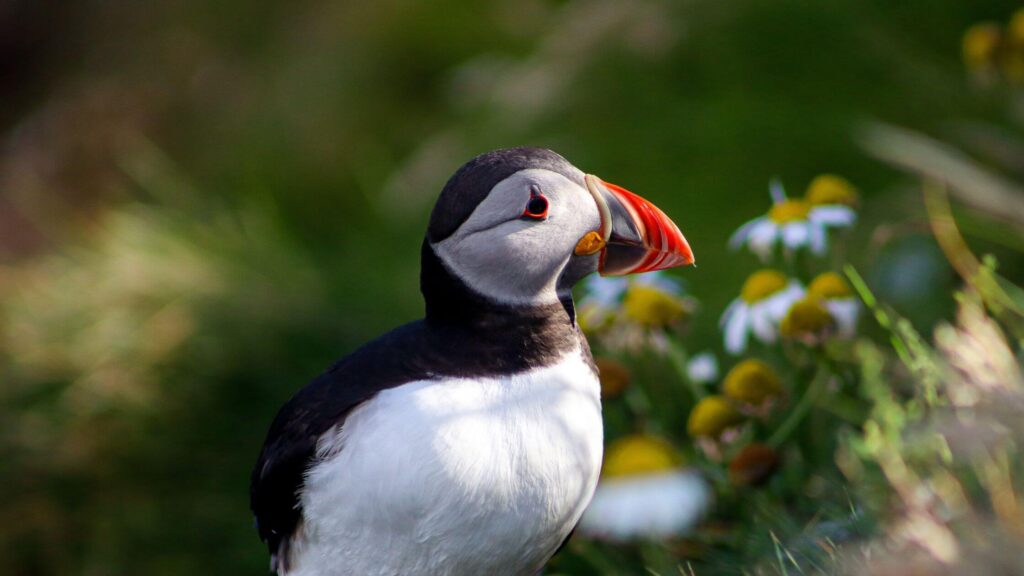
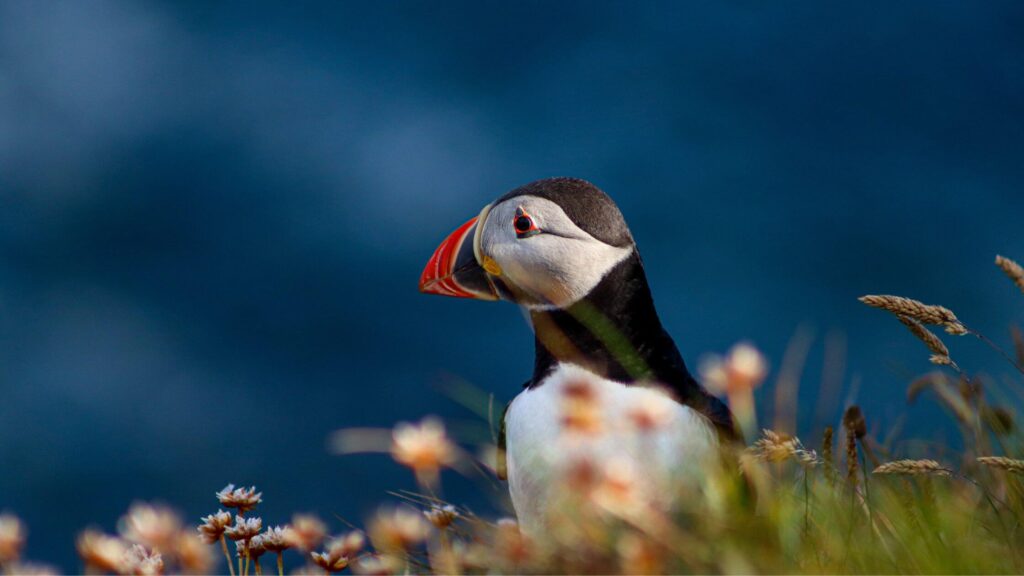
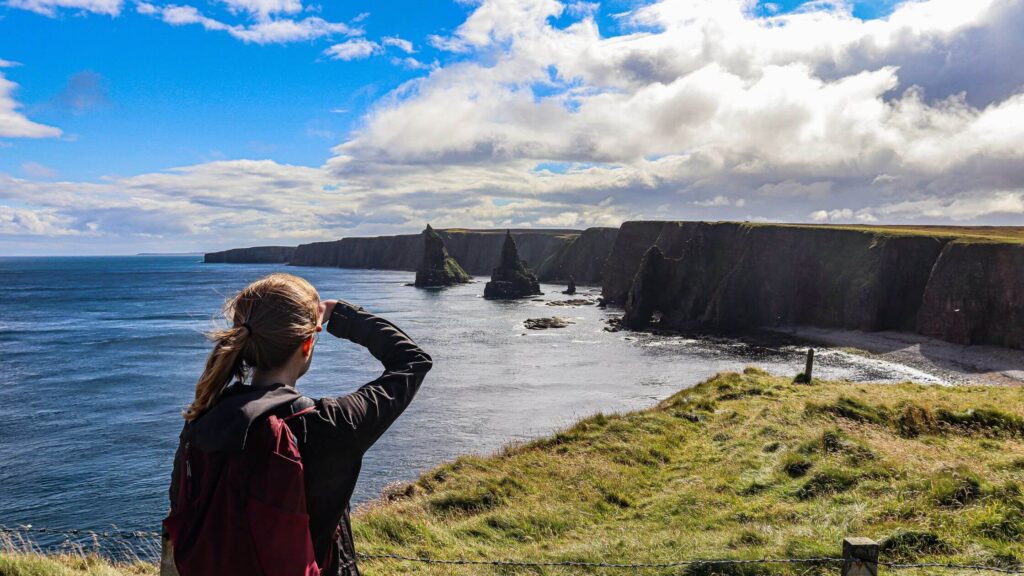
Also a stop at John O'Groats should not be missed. This north-eastern point of Scotland introduces you to a stretch of rugged coastline. Drive to Duncansby Head Lighthouse and continue your way to the Duncansby Stacks, for impressive rock formations in the sea. With a bit of luck, you will even spot puffins here!
Finally, it is worth making a diversion to the latest Scotland's UNESCO nature reserve: Flow Country. This is the world's largest and most intact peat landscape, also known as ’blanket bog‘. Especially at Forsinard Flows you can hike beautifully through the golden-purple landscape.
Want to take this tour but don't have your own car? No problem! Retrieved from GetYourGuide you will find complete tours of the Highlands, so you can discover the best of this spectacular area without driving yourself.
Travel time from Cairngorms to the starting and finishing point of the North Coast 500 in Iverness is about 45 minutes by car.
4. Glasgow
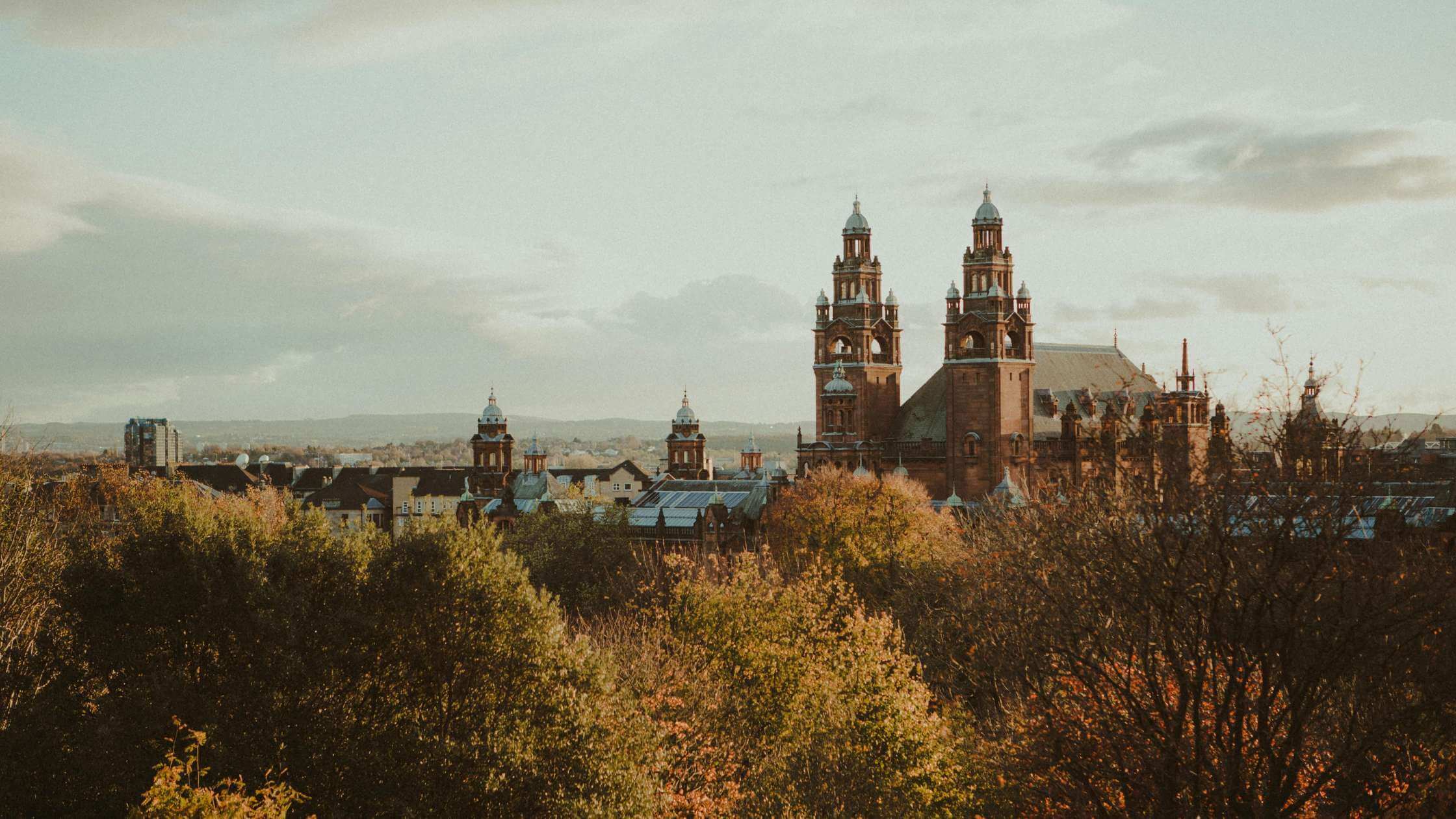
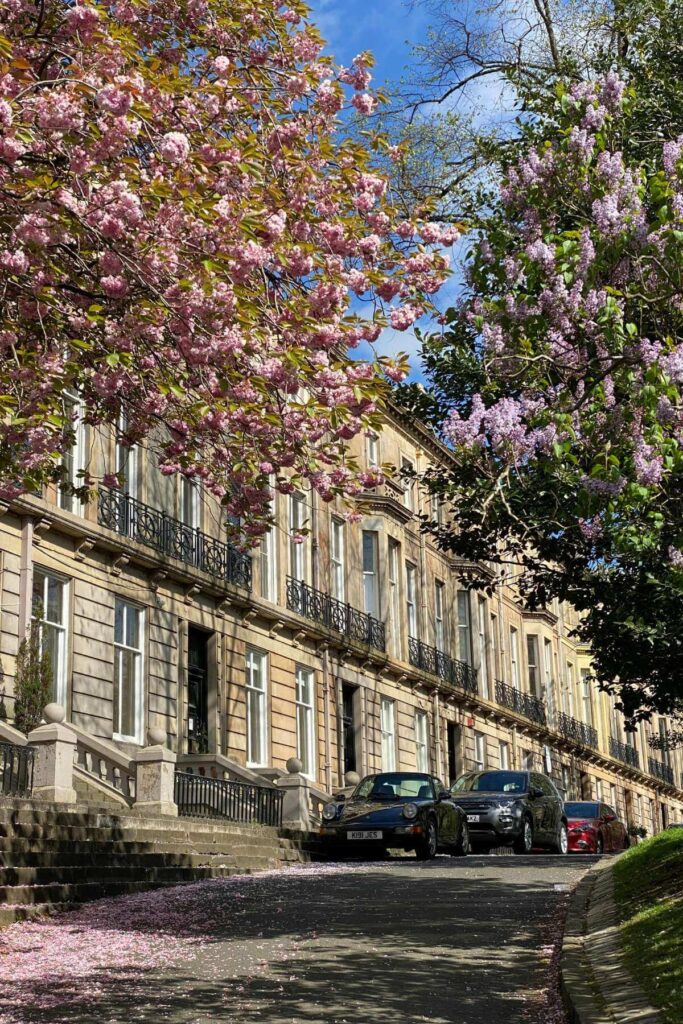
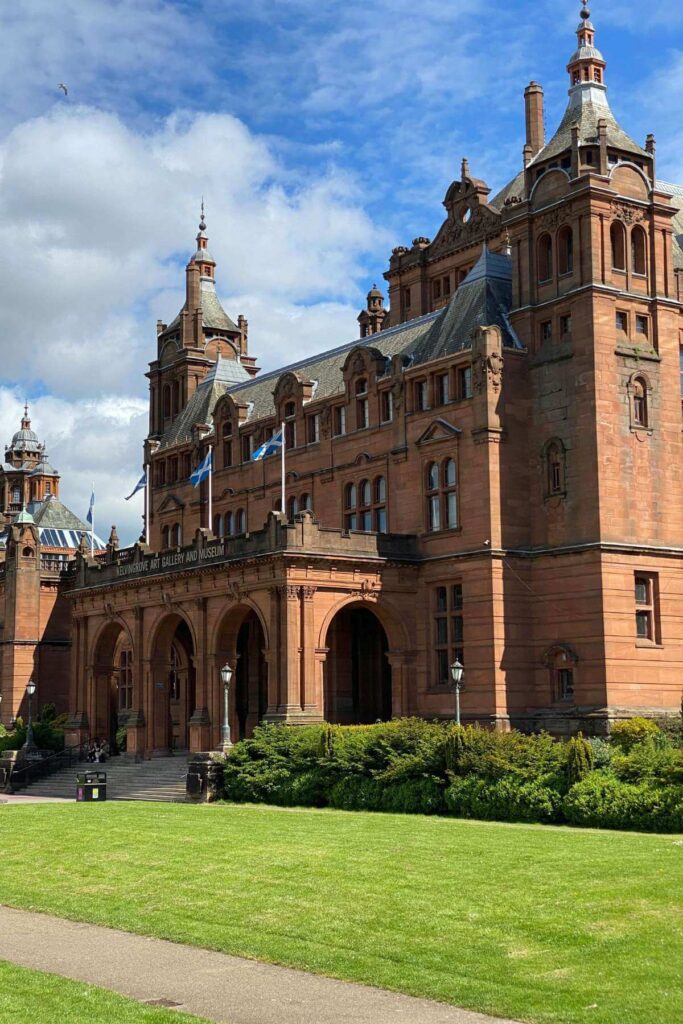
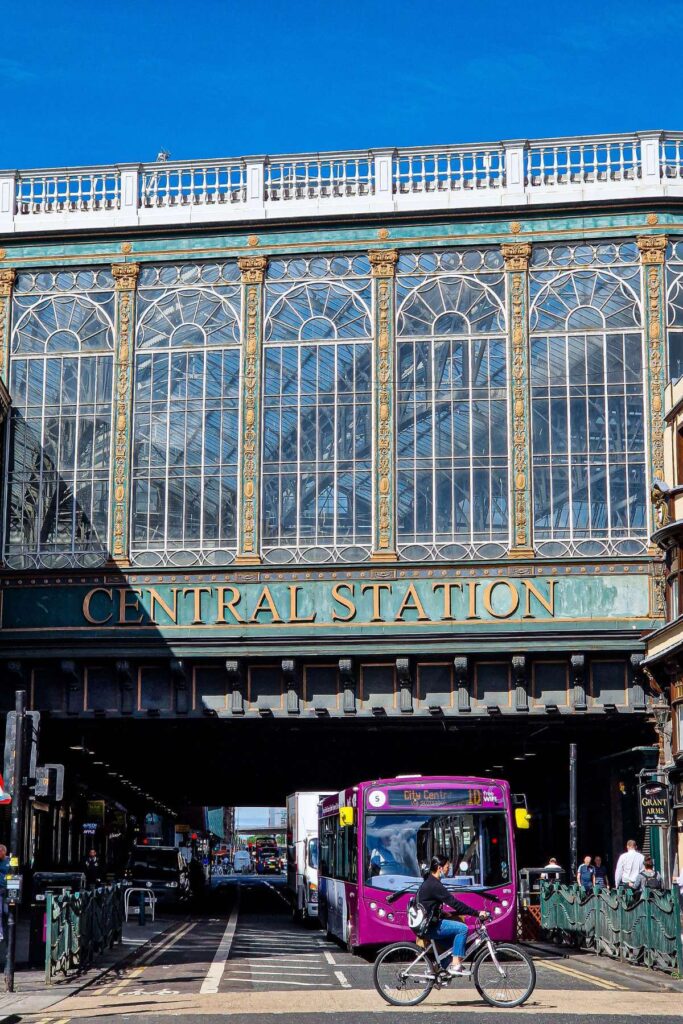
Glasgow is a city full of character, with impressive buildings, hip restaurants and hidden bars. It is therefore a stop that fits perfectly into a tour of Scotland. Our favourite neighbourhoods are Kelvingrove and Hillhead, where city life is abundant thanks to its many students. Here you can discover the beautiful Kelvingrove Museum and park, and explore cosy streets like hidden Ashton Lane. Curious about what's on offer? See all our tips for Glasgow.
Travel time Iverness to Glasgow is about 3.5 hours by car.
Read also: What to do in The Cotswolds, England? A 5-day road trip
Read also: What to do in Oxford, England? 7x handy and fun tips!
Optional: a visit to the Scottish islands
After the east coast North Coast 500, aren't you ready to drive towards Glasgow? No problem! After all, the North Coast 500 covers a huge area, allowing you to go in all directions. So do you have more time? Then go explore the Scottish islands. For this, you have roughly three options:
- The Outer Hebrides, including the famous Isle of Skye on the west coast.
- The Orkney Islands, just off the north-east coast of Scotland
- Or the more remote Shetland Islands.
We visited the Orkney and Shetland Islands during our tour of Scotland, an ideal combination if you ask us!
1. Orkney Islands
Far away from the hustle and bustle of the mainland lie the Orkney Islands: a rugged but charming archipelago off the north-east coast of Scotland. Here you will find a unique blend of ancient history, breathtaking scenery and warm hospitality. From prehistoric villages and mysterious stone circles to gigantic cliffs and quiet beaches. Orkney is a place where time sometimes seems to stand still. Whether you come for hiking, discovering historical gems or simply enjoying the peace and quiet, these islands always know how to surprise. Below you will find an overview of our tips and highlights:
How do you get to the Orkney Islands?
There are two ways to reach the Orkney Islands by car: the Northlink ferry runs between Scrabster and Stromness and takes about two hours. A ticket costs around £20 (€23.24) per adult and £60 (€69.48) per car per trip.
The Pentland ferry runs between Gills Bay and St Margaret's Bay, takes about an hour and costs £17 (€19.69) per adult and £40 (€46.32) per car.
Where to stay on dhe Orkney Islands?
Although the islands may not seem large, it can easily take more than an hour to drive from the east to the west side of the main island. It is therefore smart to choose accommodation that is centrally located. Kirkwall, the capital, is the ideal base for this: a cosy town with plenty of amenities and a nice atmosphere.
We ourselves slept outside Kirkwall at Murray Arms Hotel and Seafood Restaurant in St Margaret's Bay. So this was a bit more remote but a very nice place!
Explore the different islands
Orkney consists of several islands. In our opinion, Hoy one of the most impressive. This island gives real ‘at the end of the world’ feeling. Highlights are Betty Corrigall's Grave, the mysterious Dwarfie Stane and Rackwick Beach. The iconic Old Man of Hoy is both accessible on foot and can be admired beautifully from the ferry.
Stroll the streets of Kirkwall and Stromness
The towns of Kirkwall and Stromness are ideal for wandering around. Kirkwall is the capital, with a pleasant shopping street and sights such as St Magnus Cathedral and the Bishop's and Earl's Palaces. Stromness is a charming fishing village, perfect for a leisurely stroll through.
Discover its rich history
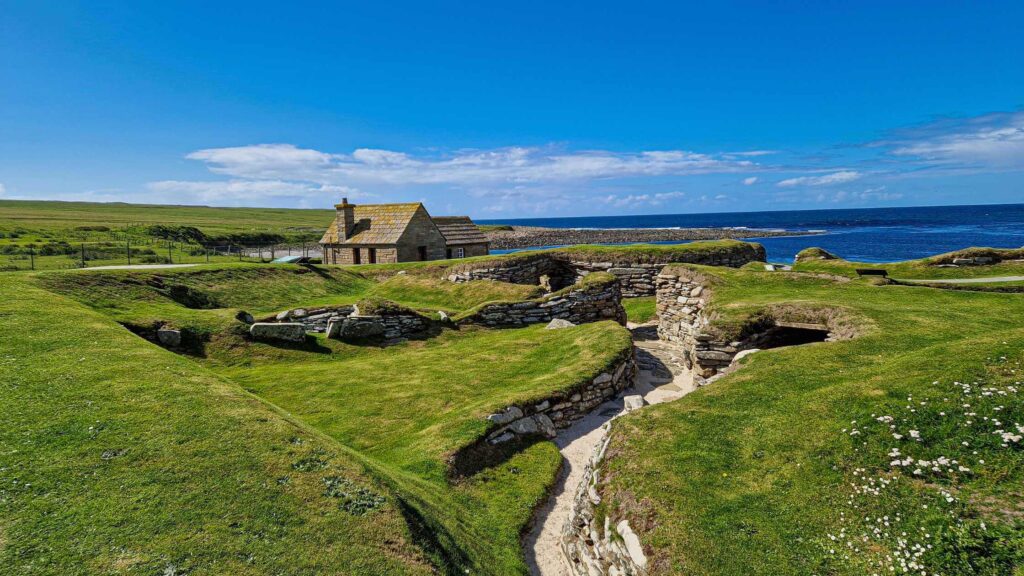
Orkney is full of impressive historical sites. Everywhere you go you come across Cairns, ancient tombs, whose Unstan Chambered Cairn is the best known. The Standing Stones by Stenness and the Ring of Brodgar are iconic; these impressive stone circles were once used for rituals. The absolute highlight is Skara Brae, a prehistoric village and Europe's oldest settlement more than 4,000 years old.
But Orkney does not only tell stories from prehistoric times. The island also played an important role during World War II; find out more here at the Italian chapel and the Churchill Barriers.
View here all Orkney Islands tours and activities via GetYourGuide.
Enjoy nature and beautiful scenery
Orkney offers breathtaking landscapes and beautiful coastlines. Waulkmill Bay is highly recommended: its white beach and clear blue waters are framed by green hills and purple heather. Windwick Bay in contrast, is beautiful at sunrise and you regularly see seals. At Weddell Bay you have an impressive view of an old shipwreck that served as an additional barrier during World War II.
Choose different walking routes with cool viewpoints
For walking enthusiasts, Orkney has a lot to offer. For example, start at Mull Head, where you can see the Gloup can admire, an impressive collapsed sea cave. Walk on to the Brough of Deerness for panoramic views of the rugged coastline. Along the route you will also come across the Yesnaby Stacks encounter, impressive stone pillars rising from the sea. Another must-see on this route is Birsay Bay, a hidden gem that you can reach at low tide and spot puffins if you are lucky.
2. Shetland Islands
North of Scotland, where the North Sea meets the Atlantic, lie the Shetland Islands. A rugged archipelago full of dramatic cliffs, deserted bays and gentle green hills, interspersed with clear blue waters and white sand. Here, you really feel you are on the edge of Europe. From charming villages to ancient settlements, from sand bridges connecting islands to lighthouses on spectacular cliff edges, each island has its own character and secrets. Below is a list of tips and highlights:
How to get to the Shetland Islands?
There are two ways to reach the Shetland Islands by car: Take the ferry from John o'Groats to the Orkney Islands (1-2 hours) and then continue your route by boat to Shetland (6 hours during the day or 8 hours at night). Or opt for the overnight ferry from Aberdeen (about 14 hours).
Where to stay on de Shetland Islands?
Lerwick is the capital of Shetland. Although the town is small, you will find the largest selection of accommodation, shops, cafés and restaurants here. From Lerwick, you can also easily explore other parts of the islands.
We stayed at Solheim Guest House In Lerwick. A simple but nice accommodation 350 metres from the city centre.
Stroll the streets of Lerwick and Scalloway
In Lerwick you will find the Shetland Museum, a perfect place to learn more about the islands' history, culture and nature. The second city, Scalloway, is smaller and quieter, but offers access to beautiful bays such as the Sands of Meal and Minn Beach.
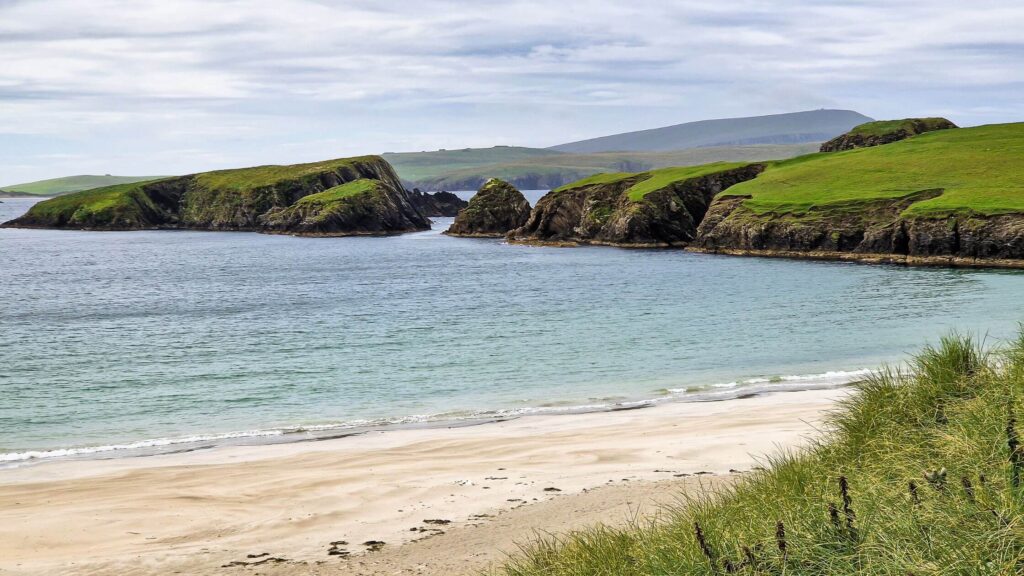
For impressive sandy beaches, you can St Ninian's Isle and Beach visit, on the south side of the main island. Connected by a sand bridge, the island forms a spectacular split bay with white sand and clear blue water. Here you can spot birds, rabbits and sometimes even a stray seal.
Discover its rich history
On the southernmost tip of the mainland are two iconic spots: Jarlshof and Sumburgh Head Lighthouse. Jarlshof contains highly visible remains of prehistoric and Norse settlements and is unique in Europe, having been continuously inhabited for more than 4,000 years.
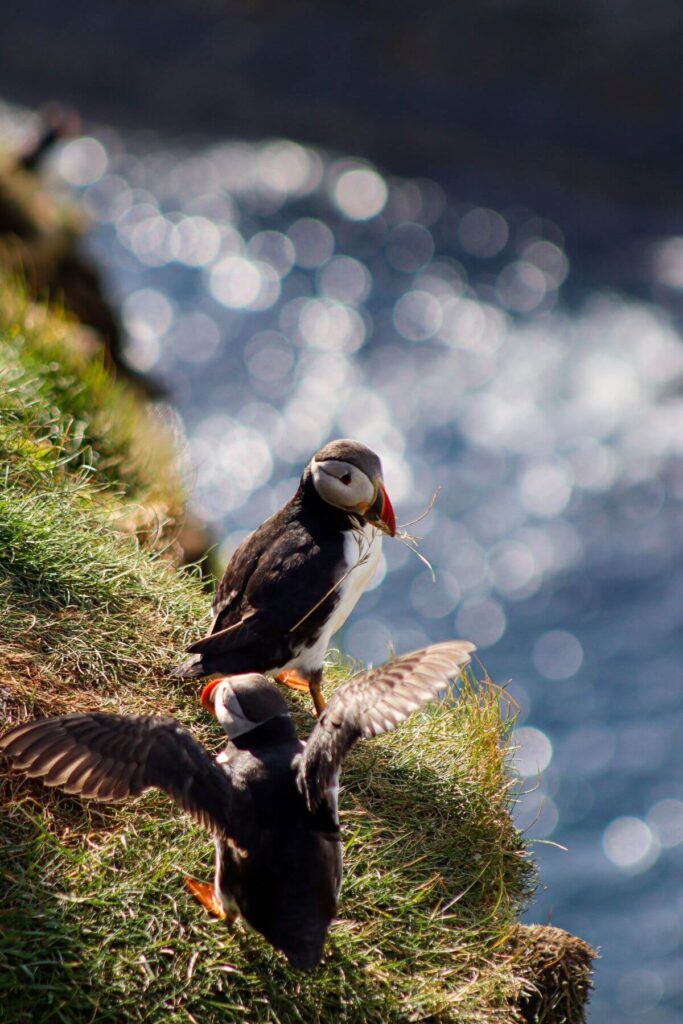
Sumburgh Head Lighthouse is one of the best places in Shetland to see puffins. Get up close and admire these fascinating birds, and with a bit of luck you might even spot an orca!
Enjoy nature and beautiful scenery
Shetland consists of several islands, some connected to the main island and others accessible only by ferry. Yell is known for its vast beaches, while Unst famous for its large bird populations. If you don't have much time, you can already get a good idea of Shetland by staying on the central island.
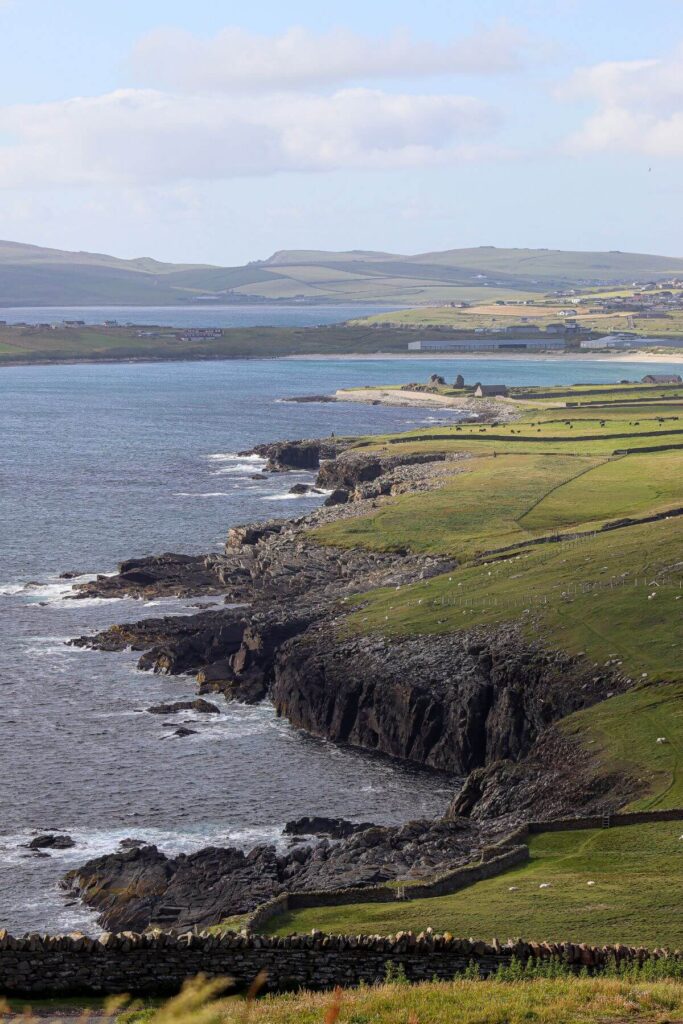
Either way, the landscape is beautiful and varied: soft green hills, clear blue water, rugged red cliffs and colourful moorlands. For hiking enthusiasts, the area around the lighthouse of Eshaness an absolute must. The volcanic rock here creates dramatic cliffs and spectacular sea views, including the famous Dore Holm, a rock formation in the shape of a horse.
Choose different walking routes with cool viewpoints
Shetland is an outdoorsman's dream. Besides Eshaness and Sumburgh Head there are countless hiking trails and viewpoints to discover. From soft green hills to rugged cliffs, the colours of the moors and the vastness of the sea make every view special. Here you can truly escape the daily hustle and bustle and immerse yourself in the rugged beauty of the islands.
Our favourite spots during our tour of Scotland
Of course, you also want to be able to spend a pleasant night during your trip. Although we did a lot of wild camping along the way (you can find these places via the app Park4Night), there are a number of campsites and parks we would like to share with you.
In the Cairngorms we recommend staying at Rothiemurchus Camp & Caravan Park or The Lazy Duck. Both places are beautifully situated and offer a relaxing base to explore the area. In Inverness you can contact Bunchrew Caravan Park Ltd, a nice place close to the city and yet quiet on the waterfront. For a truly adventurous overnight stay, you can stay at Windhaven Camp Site stay, located on the edge of a cliff, frankly quite exciting, but the view is phenomenal! Finally Dornoch Caravan & Camping Park a perfect stop to unwind. This place is quiet, spacious and ideal as a stopover during your tour.
On the islands, we chose to stay in hotels. On the Shetland Islands, for instance, we slept at Solheim Guest House in Lerwick. Simple but nice accommodation, just 350 metres from the city centre. On the Orkney Islands, we chose the Murray Arms Hotel and Seafood Restaurant, just outside Kirkwall. A bit more remote, but definitely a nice place to stay overnight and enjoy the local atmosphere.

We hope these tips help you plan your tour of Scotland! Do you have any questions about this blog? Then you can Countingborders or send us a message at any time via Instagram.
We try to keep this blog about, our round trip through Scotland, as up-to-date as possible but this cannot be done without your help. If anything has changed, please let us know via info@thousandtravelmiles.nl.
Some of the links in this blog about ‘roundtrip Scotland’ are affiliate links. If you choose to make a purchase through these links, we receive a small commission at no extra cost to you. By using these affiliate links, you support Thousandtravelmiles. This allows us to roam the world, fund the website and offer you free information for planning your trip. This means that a ‘real’ person will do a little joy dance if you make a purchase through this link! You're a legend!