Bali is an island that many travellers end up on sooner or later. The island has cool sights, is well organised, affordable and suitable for almost every type of traveller: couples, solo travellers, groups of friends, backpackers and families. Still, there are some things that are handy to know in advance. That is why we have collected our most important Bali tips and handy facts for you, based on our own experiences on the island. With these, you will be well prepared for your trip and make the most of your time in Bali.
General information on Indonesia
Are you planning your trip to Indonesia? Then check out our tips for the best travel period, daily budget and applying for a visa. You can find all the information you need about Indonesia here.

Our tips for a trip to Bali
For those visiting Bali for the first time, it can be nice to know a few things in advance. The tips below are based on our own experiences and will help you travel the island smartly and relaxed. While you are planning your trip, it helps to familiarize yourself with the different options for a holidays to Bali. View all our blogs about Indonesia and travel prepared!
1. Arrange your visa and Arrival Card before departure
If you stay in Bali for less than 30 days, you can use a Visa on Arrival. You can arrange this on arrival at the airport, but bear in mind that you may have to wait there for a long time. We therefore recommend that you apply for both your visa and Arrival Card online before departure. This saves time and ensures that you can proceed more quickly to passport control and baggage after landing.
 Tip: arrange your visa online, then you can often use the automatic passport gates. Convenient and quick, although you won't get a stamp in your passport in that case.
For stays of up to 30 days, choose the B1 visa. Applying is easy: you fill in your details, upload the required documents and pay online. You will receive confirmation by e-mail. Print it out or have it available offline.
In addition, you are required to submit a Arrival Card fill in. After filling it in, you will receive a QR code that will be scanned on arrival. Save it or take a screenshot, so you don't have to depend on your internet connection at the airport.
Tip: Want instant internet as soon as you land? Then arrange an e-sim in advance, for example via Airalo or Saily. We have had good experiences with both and it saves a lot of hassle on arrival.

2. Pay tourist tax before you leave for Bali
Since 2024, you pay tourist tax on arrival in Bali. You can arrange this on the spot, but as with the visa, it often means extra waiting time. Therefore, it is smarter to arrange this online before departure via the official website of the Balinese government.
Applying is easy: you fill in your details, pay online and receive a QR code by e-mail. Have it scanned on arrival. Keep the code safe and make sure you can open it offline, e.g. with a screenshot.
The QR code is valid for 30 days or until you leave Indonesia. If you go to another island in between and come back to Bali later, you will not have to pay the tourist tax again.

3. Arrange pick-up from the airport in advance
After a long flight to Bali, you really only want one thing: to get to your accommodation as quickly as possible. But as soon as you walk out of the arrival hall, there are dozens of drivers waiting for you all with different prices. Especially if you are tired, you often don't feel like negotiating right away or having to assess which driver is reliable.
That's why it's nice to arrange a pick-up before you leave. This avoids hassle, you know exactly what you are paying and there is someone with a nameplate ready as soon as you come through the doors. You get in and the holiday can begin.
4. Make sure you have an exit ticket before you fly to Bali
When checking in for your flight to Bali, you will almost always be asked for a exit ticket. This is mandatory because a visa on arrival allows you to stay in Indonesia for a maximum of 30 days. Without proof that you are leaving the country again within that period, you are often not even allowed to board.
An exit ticket does not have to be a return flight home. A loose ticket to another destination is also fine, as long as the date is within 30 days of arrival lies. Moreover, you will already need this ticket at the applying for your visa online, so arrange this on time.
Do you travel on to another country in Southeast Asia, such as Singapore or Malaysia? Then you can use that ticket as proof of exit. Always check that the date is correct, though, so you don't get a hassle at the airport.
5. Here's what to look out for when withdrawing money in Bali
Withdrawing money in Bali is slightly different from back home. This is because the ATM gives first the money and only then your debit card back. As we are used to the opposite in the Netherlands and Belgium, it happens regularly that travellers forget their pass. So pay extra attention to this, especially after a long trip. In addition, always protect your PIN code. Skimming is rare, but the risk is there. By keeping your hand above the keyboard, you reduce the risk of problems.
We personally prefer to choose ATMs at banks or larger shops. They just feel more reliable and if something does go wrong, there is usually someone nearby who can help. Using an ATM at the roadside often works fine too, but at a bank or larger shop just feels more secure.


6. Bali traffic: this is useful to know
Bali's public transport is limited, so you will soon have to rely on taxis, private drivers or scooters. Fortunately, transport on the island is easily arranged, as long as you know what is convenient.
For short and longer trips Grab and Gojek ideal. Grab works like Uber, while Gojek is especially popular for motorbike taxis. In busy areas, a motorbike taxi often gets you there faster and cheaper than a car. If you are travelling with a large group of people, you can use your accommodation or platforms such as 12Go easily book a taxi or driver. This is slightly more expensive, but relaxed and reliable.
Tip: Internet is not a luxury. So arrange an e-sim in advance or buy a local SIM card on arrival so you can book transport straight away.
But fair is fair: riding your own scooter is really the most fun! Just keep in mind that scooters in Bali are officially motorbikes, with more power than we are used to. Officially, you need a motorbike licence for this. Many travellers still rent a scooter with just a car licence, but be aware that you are then not insured in case of damage or an accident. So think carefully about whether you feel comfortable with this.
Tip: in any case, arrange an international driving licence with the ANWB. Without this international driving licence, the chances of being fined in popular areas are high.
7. What you really need to know about health and safety in Bali
Bali is a fine and accessible destination, but like on any trip, there are a few things you need to be smart about. The biggest concern is traffic. Scooters in particular cause many accidents, especially in crowded areas in the south of the island. Always wear a helmet, only ride if you are really comfortable with it and avoid riding in the dark if you don't know the island well yet.
Once you have that under control, the rest is mostly about small, practical choices. Always drink bottled water, even when brushing your teeth. Your body is not used to tap water. Street food is part of Bali and often extremely tasty, but preferably choose places where it is busy and the food is freshly prepared. This reduces the chances of stomach upsets!
Finally, at temples, dress codes often apply. Shoulders covered and wearing a sarong is usually compulsory. If you don't have one with you, you can almost always borrow or hire one at the entrance. And do you see monkeys? Don't leave loose items like sunglasses, phones and bottles lying around. They will be gone faster than you think.

8. Special accommodation in Bali does not have to be expensive at all
Bali is known for its unusual accommodations, and for good reason. From small-scale bungalows among the rice fields to boutique hotels in the jungle. For relatively little money, staying overnight in Bali quickly feels special.
Because the selection is so large, it is smart to look not only at the photos, but also at the location. An accommodation can look great, but be next to a busy road or far away from everything. Therefore, always check the reviews and look at the location on the map so that you choose a place that suits your way of travelling.
Tip: Bali can be busy, but quiet spots are still plentiful. By cleverly choosing where to stay and alternating busy regions with nature, you'll experience Bali a lot more relaxed.
9. Think carefully about attractions and tours with wildlife
We are not going to forbid you anything, but we are going to be honest with you. In Bali (and the rest of Indonesia), you will still come across activities where wild animals are used for entertainment. Think elephant washing, animal petting or monkeys doing tricks. It sometimes looks harmless, but in practice this almost always involves animal suffering.
Our own guideline is simple: if a wild animal can be petted, held, ridden or forcibly photographed, it is usually not right. Fortunately, there are plenty of alternatives in Bali that do feel right. For instance, go snorkelling or diving in the wild or visit protected nature reserves. This way, you see animals in their own environment and support initiatives that contribute to the conservation of Bali!
10. Learn a few words of Indonesian (it is really appreciated)
Balinese are known for their friendliness and greatly appreciate it if you speak a few words of Indonesian. You don't have to be able to speak whole sentences; a simple greeting or a “thank you” already shows that you are making an effort for their culture, and it is sincerely appreciated.
Even without a linguistic knack, this works fine. Indonesian is quite easy: the words are short, easy to pronounce and easy to remember. Moreover, it immediately makes contact with locals a lot more fun. A smile and a “terima kasih” often do the trick.
- Good morning (6-10am): Selamat pagi
- Good day (10-15am): Selamat siang
- Good afternoon (3-6pm): Selamat sore
- Good evening (18-06h): Selamat malam
- Thanks: Terima kasih
- Hati-Hati: take care, watch out, pay attention
- Please (when you give something): Silakan
- Please (when you ask/order something): Tolong
- You're welcome/inside: Sama-sama
Fact: because Indonesia used to be a Dutch colony, many words are recognisable, such as towel, auntie, office, free and even ashtray!


Read also: Why travel insurance is important! Discover these 6 reasons
Read also: First time backpacking? Here’s what you need to know
11. Be mindful of Balinese culture
Balinese are always polite in their communication and will almost never say “no” directly. Even if something is actually impossible, they try to explain it in a friendly way. It is a culture in which respect, harmony and helpfulness are hugely important. Therefore, it is nice to be aware of this as a traveller. Stay friendly, listen patiently and take into account the way Balinese people communicate.
So... when things take a little longer, go just a little differently than discussed or seem more complicated than expected. Go with the flow and take your time. It really does always work out!
12. Sample Indonesian cuisine (and don't skip the warungs)
Indonesian cuisine is, in our opinion, one of the tastiest in the world. You can eat everywhere in Bali, from trendy cafés to upmarket restaurants, but the best meals are often found in small warungs. These are local eateries that cook without fuss, full of flavour and usually for just a few euros per dish.
If you are in Bali for the first time, try at least a few classics. Nasi goreng is on the menu almost everywhere, gado gado is a mix of vegetables with peanut sauce and rendang (slow-cooked beef in coconut and spices) is a real favourite. Also soto ayam, a flavourful chicken soup, should not be missing from your list.
Want to learn more about local cuisine? Then a food tour is a nice addition. You taste dishes you might otherwise skip and eat at places where locals themselves come, a fine way to get to know Indonesian cuisine better.
13. Get up early: Bali is at its most beautiful in the morning
Bali can get pretty crowded in popular spots. Think waterfalls, rice terraces, temples and famous viewpoints. If you go out early, you will experience these places a lot quieter and often at their most beautiful.
The nice thing is that after that, you are in no hurry for the rest of the day. You've already seen your highlights and can have a leisurely lunch, go to the beach, have a coffee or just do nothing!
14. Choose your destinations wisely: these are the best places in Bali
Bali has an awful lot of beautiful places, but not every destination suits every traveller. Some areas are busy and touristy, while others are very quiet and authentic. It is therefore smart to decide well in advance where you want to stay, so that your trip suits your needs completely.
Personally, we prefer to skip Kuta and Seminyak. These places are very touristy, have busy beaches and for us lack the charm that makes Bali so unique. Fortunately, there are plenty of alternatives that do have the nice atmosphere Bali is known for. Check out the ultimate travel itinerary for Bali and surrounding islands!
15. Combine Bali easily with other destinations in Southeast Asia
Bali is not only a fine final destination, but also a good base to combine other places in Southeast Asia. Thanks to short flights and good connections, you can easily add an extra destination to your trip.
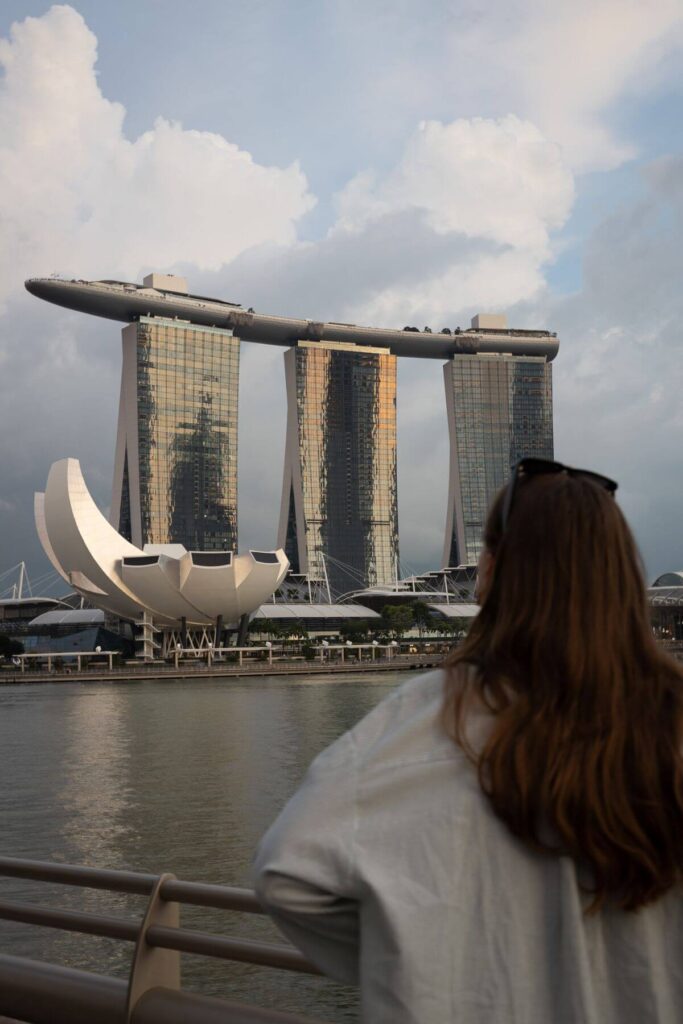
Singapore is a popular combination. The city is modern, sleek and totally different from Bali, which just makes for a nice change. Cities such as Kuala Lumpur and Bangkok, or islands like Lombok and Flores, are good to combine if you are in the region anyway.
Tip: many travellers make a stopover in Dubai en route. Many flights to Bali go via this city, making it easy to add a few days of city vibes to your trip. Those looking to combine Dubai with Bali will find great options for a holidays in Dubai.

Frequently asked questions about travelling to Bali
1. What is the best travel time for Bali?
Bali is warm all year round, but the best travel time is April through October. This is the dry season with lots of sunshine and little rain. In the rainy season (November to March), rain can be more frequent, but travelling is still fine, especially if you want to avoid the crowds.
2. Is Bali safe to travel?
Yes, Bali is generally safe. The biggest risks are traffic, scooter accidents and minor scams in tourist areas. With common sense and a little preparation, you will travel without any problems.
3. What about scooter hire and insurance?
Officially, you have a motorbike licence required for scooters in Bali. If you rent with just a car licence, you are not insured in case of damage or accidents. In addition, we always make sure we carry an international driving licence. This at least saves problems at police checks. We also recommend that you always wear a helmet and avoid long distances in the dark.
4. Where is the best place to stay in Bali?
Where best to stay in Bali depends on your travel style.
- Ubud: nature, culture, waterfalls
- Sidemen: tranquillity, rice fields, authentic life
- Canggu: hip, surf, cafes
- Uluwatu: cliffs, beaches, relaxed vibes
- Amed: snorkelling & diving
- Munduk: mountains, cooler, waterfalls
- Nusa Islands: beach, hikes, super beautiful viewpoints
5. How expensive is a trip to Bali?
Bali can be as cheap or luxurious as you make it. In addition, it also depends a bit on where you are. If you want to stay in the most touristy areas, you will automatically pay more than in the areas around it.
- Food in warungs: €2-€5
- Western food: €6-€12
- Hotels: €20-€100+
- Scooters: ± €7 per day
- Taxis: cheap via apps. Allow for a few euros per ride (depending on mileage).
6. Is Bali suitable for a first long-distance trip?
Yes, absolutely. The island is uncluttered, safe, well-equipped for tourists and the locals are incredibly friendly. For many travellers, Bali is the perfect first long-haul trip! In fact, it was also our first faraway trip and as you can see on our landing page we were sold after that!
7. How busy is Bali really?
The south is busy, especially Canggu, Seminyak and Kuta. But just 15-20 minutes away you do find tranquillity: Ubud outside the centre, Sidemen, Munduk, Amed and Nusa Islands. Besides, it also helps if you get up early when going to popular attractions.
8. What means of payment do you need?
Cash (IDR) is handy, but more and more places also accept debit and credit cards. Always have some cash for markets, small warungs and taxis. Want to know more about PIN payments abroad? Read our blog: N26, Wise or Revolut: Which is best for travelling and paying abroad?
9. Do you need vaccinations for Bali?
Recommended vaccinations are DTP and Hepatitis A. Depending on your route and activities, additional advice may apply. Always check the current advice via your GGD before departure.
10. What should you do if you get sick in Bali?
There are several good international clinics, especially in the south and Ubud. Keep receipts and report it to your travel insurance immediately. Drink plenty of water, avoid raw food in case of abdominal discomfort and always take stuff like diarrhoea inhibitors and ORS.

We hope these tips will help you make your trip to Bali just a little bit more relaxed, fun and easy. Bali is an island that touches you, through its nature, culture and especially its people. Whether you go for the first time or have been before, every time you discover something new. Do you have any questions or want advice on your itinerary? Feel free to send us a message at Instagram or mail to info@thousandtravelmiles.nl.
We try to keep this blog as up-to-date as possible but this cannot be done without your help. If anything has changed, please let us know via info@thousandtravelmiles.nl.
Some of the links in this blog are sponsored or affiliate links. If you choose to make a purchase through these links, we receive a small commission at no extra cost to you. By using these affiliate links, you support Thousandtravelmiles. This allows us to roam the world, fund the website and offer you free information for planning your trip. This means that a ‘real’ person does a little dance of joy when you make a purchase through this link! You're a legend!