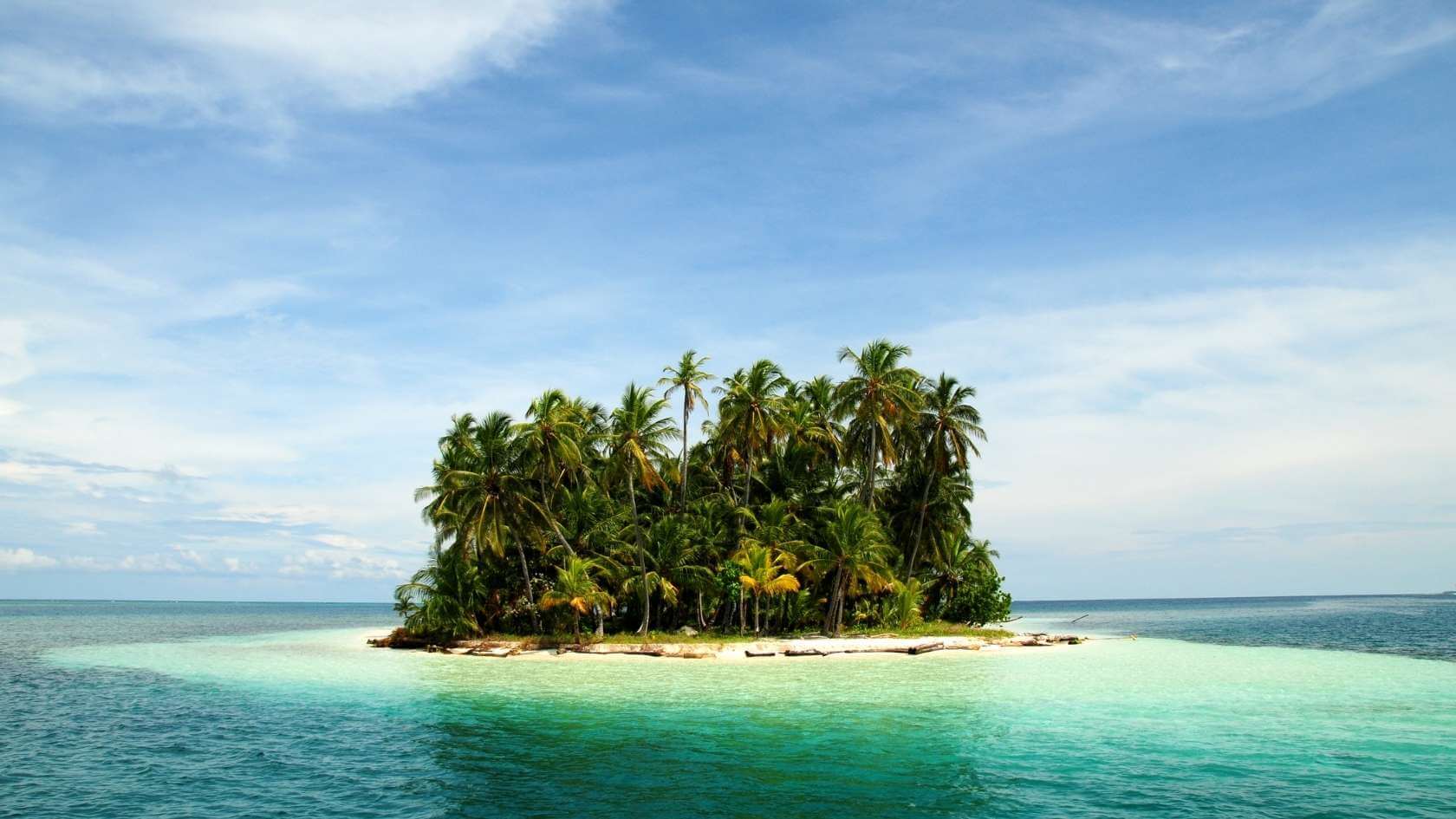

The San Blas Islands feel like a place that seems almost too beautiful to be real. This tropical archipelago off the Caribbean coast of Panama consists of hundreds of tiny islands with snow-white beaches, palm trees and water in every shade of blue. No resorts, no beach clubs and hardly any Wi-Fi. Just small sandbanks, simple huts and the sound of the sea. It is precisely this simplicity that makes San Blas so special. The pace of life is slower here; days are spent snorkelling, island-hopping and relaxing in a hammock. In this blog, you’ll find everything you need to know: how to get there, what to expect and why a visit to the San Blas Islands is one of the most beautiful experiences Panama has to offer.
General information about Panama
Are you planning your trip to Panama? Then be sure to check out our Panama landing page with information on the best time to travel, your daily budget, transport and practical tips for your road trip. That way, you’ll be well prepared before you set off.
How do you get to the San Blas Islands?
Most travellers visit the San Blas Islands from Panama City. Virtually all tours set off early in the morning, often around five or six o’clock. You’ll be picked up from your hotel or hostel and get into a 4×4 that will take you to the coast.
The journey takes around 2.5 to 3 hours and passes through hilly jungle terrain. The road has plenty of bends and steep sections, but the views along the way are stunning. You’ll eventually arrive at the harbour in Cartí, where the boats depart for the islands.
From here, you’ll board a small speedboat that will take you to your first island. As soon as you leave the harbour, the landscape changes rapidly. The water becomes increasingly clear and tiny islands dotted with palm trees and white beaches appear all around you. It feels a bit like sailing into a tropical postcard.
To enter the area, you must pay an entrance fee to the Guna Yala community. This amounts to approximately $20 per person (around €18, depending on the exchange rate) and must be paid in cash at the entrance to the area.
What are the San Blas Islands?
The San Blas Islands lie off the north-eastern Caribbean coast of Panama and form part of the Guna Yala region. The archipelago consists of more than 360 small islands, of which only 50 islands are inhabited.
What makes San Blas special is that the area is managed entirely by the Guna people. This indigenous community has lived here for centuries and determines for itself how tourism is organised. As a result, large-scale development has never really taken off, and you won’t find any large hotels, resorts or luxury infrastructure there.
 Tip: bear in mind that some places may still be busy. Certain boat tours take large groups to the same islands at the same time. We therefore recommend that you look carefully in advance for operators with good reviews, so that you can enjoy a more intimate and pleasant experience.
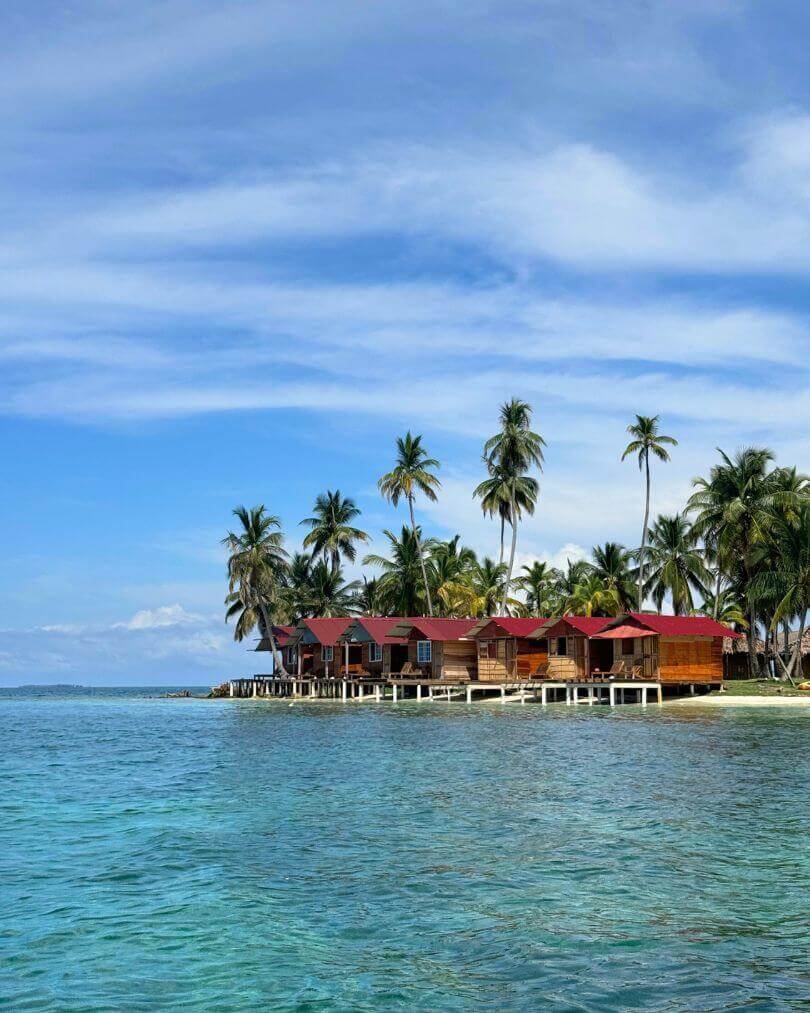
Most accommodation consists of simple wooden or bamboo huts situated right on the beach or sometimes even built over the water. Luxury is not the aim here. San Blas is all about nature, tranquillity and simplicity. Many of the islets are barely bigger than a football pitch, and some can literally be walked around in a few minutes.


How does a San Blas tour work?
Almost everyone visits San Blas on an organised tour. That might sound like a mass tourist experience, but in practice it actually feels surprisingly intimate (if you book with the right operator!). Most tours include transport, boat transfers, accommodation and meals. You’ll travel in a small group and usually spend the night on different islands.
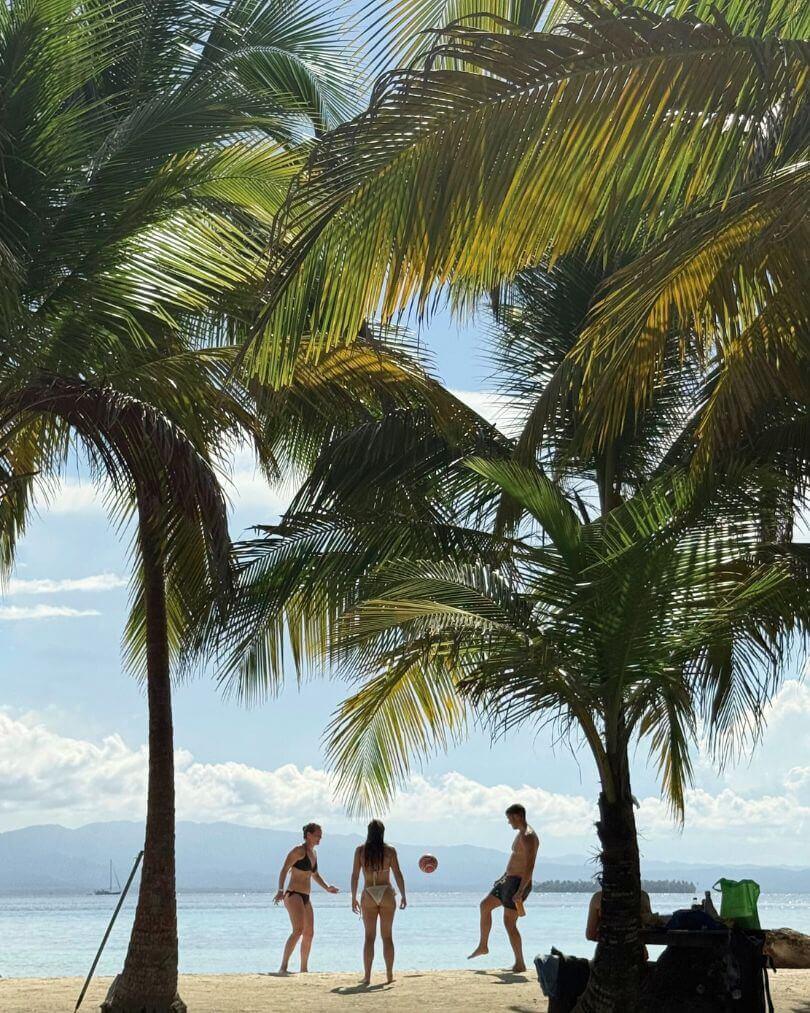
The days often follow a similar pattern. After breakfast, you board a boat that takes you to other islets or snorkelling spots. On the way, you stop at sandbanks, coral reefs or small beaches where you can swim or snorkel. In the afternoon, you usually return to the island where you’re staying for the night or head to a new island for the following night. Evenings are quiet: a simple meal, a walk along the beach and then often an early night.
Life on San Blas is simple. Don’t expect air conditioning, hot water or, at times, even a reliable electricity supply. But that’s all part of the experience here.
What our multi-day tour was like
Exactly what a San Blas tour involves varies from one organisation to another. However, the itinerary often follows a similar structure: every day you visit several islands, snorkelling spots or sandbanks, and you spend the night on a different island. To give you a good idea of what such a trip might look like, we’ve set out the Day-by-day itinerary for our own San Blas tour.
Day 1: Arrival at the San Blas Islands
We set off around 08:00 – 08:30 by boat from the harbour at Cartí towards the first island. Before long, the first small islets with white beaches and palm trees appear on the horizon.
Our first stop was Pelícano Island, also known as the Money Heist Island (Money Heist). From here, our island-hopping trip began straight away. On the first day, we visited two other islands and a natural sandbank in the middle of the sea.
During the day, we went snorkelling at various spots and also paid a brief visit to a small indigenous community. At the end of the afternoon, we returned to the island Pelícano Island, where we spent the night.
Day 2: Island hopping and snorkelling
After breakfast, we got back on the boat to continue our island adventure. We set off towards Isla Aroma, where we checked in for the following night. Between 9.00 am and 10.00 am We were picked up for another excursion around various islands. Among other places, we visited:
- Isla Chichime, where you can go for a swim and relax on the beach
- Isla Diablo, a small tropical island with crystal-clear waters
- another natural sandbank with several starfish.
Around 3.30 pm We returned to Isla Aroma, where we spent the rest of the afternoon relaxing on the beach.
Day 3: Snorkelling around remote islands
The next morning, we were woken up between 10.00 and 10.30 am picked up for… you guessed it… another boat trip. During the day, we visited Yanidub, one of the more remote islands in the archipelago. The water around this island is incredibly clear, making it perfect for snorkelling.
Originally, we were going to go to Perro Chico were going to, but as there was no availability there at the time, the organisers took us to Isla Aguja. We had lunch here and spent our third night here.
Day 4: Final snorkelling stop and back to Panama City
We spent our last morning relaxing at Isla Aguja after which we were picked up again for one last snorkelling stop.
We went snorkelling with a small group at a quiet spot where, amongst other things, we sharks, barracudas and starfish saw. We then visited another natural sandbank in the middle of the ocean. After lunch at Isla Chichime We still had a little time to enjoy the beach and the sun before we finally returned to the mainland and set off for Panama City.


Read also: Car hire in Panama: everything you need to know + our tips
Read also: Panama Tour: a complete itinerary for 2 or 3 weeks
How many days do you need for the San Blas Islands?
Many travellers opt for a day trip from Panama City, but to be honest, we think that’s too short. The journey there takes a couple of hours, and before you know it, you have to head back again. We would recommend at least two nights to stay. That way, you’ll really have time to see several islands and experience their laid-back pace. Three to four nights is actually ideal. It gives you plenty of time to visit different snorkelling spots, explore several islands and really get away from the hustle and bustle of travelling.
The best time to visit the San Blas Islands
Just like the rest of Panama, San Blas also has two seasons: the dry season and the rainy season. On paper, the rainy season might sound less appealing, but in reality it’s often not as bad as you’d think. After all, it doesn’t mean it rains non-stop for days on end.
During this period, you can expect the occasional short, tropical shower, but these are often offset by long, sunny spells. An added bonus is that there is usually there is less wind, which means the sea is calmer, making it ideal for snorkelling.
- The The dry season runs from December to April inclusive. During these months, there is usually less rain, but it is often a bit windier. As a result, the sea can sometimes be a little rougher.
- The The rainy season lasts from around May to November inclusive. The months September and October are known as the wettest time of the year and are therefore not quite as ideal for a visit to San Blas. The same applies, incidentally, to virtually the whole of Panama.
In short, both seasons have their own advantages. The dry season often brings more stable weather, whilst the rainy season can actually result in calm waters and good snorkelling conditions.


How much does a visit to the San Blas Islands cost?
The price of a San Blas tour can vary considerably. How much you pay depends mainly on the number of days, the type of accommodation and the tour operator you choose. Most multi-day tours include:
- transport from Panama City
- boat transfers between the islands
- accommodation
- three meals a day
- snorkelling stops and island visits
We paid €445.41 per person for 4 days, including the points listed above. In addition, you always pay a entrance fee for Guna Yala of approximately $20 (± €18). Drinks, snacks and, occasionally, extra activities are not usually included.
 Tip: make sure you take enough cash with you. On the islands, you can often buy drinks, snacks or simple cocktails.
Where can you book a San Blas tour?
Most travellers book their trip to San Blas through a tour operator in Panama City or online in advance. There is a wide range of options available, but the quality can vary considerably. It is therefore advisable to carefully check reviews and other travellers’ experiences beforehand.
Would you like to compare different providers? Then have a look at GetYourGuide. Here is an overview of a number of tours and organisations, so you can easily see which option suits you best. We ended up booking our tour with Panama San Blas Tours and were very satisfied with the organisation and communication.


Practical tips for the San Blas Islands
A visit to San Blas is different from a typical beach holiday. A few practical tips will make your stay a lot easier.
- Always take your passport as well, because this can be checked at the entrance to the area.
- It’s best to leave your large backpack or suitcase behind in Panama City and just take a small bag with you. Your swimwear, a towel and a few light items of clothing will usually see you through just fine.
- Don’t forget sun cream and DEET Bring along. The sun can be quite strong here, and on some islands you may be bothered by mosquitoes.
- It’s also a good idea to have a bit of cash to take with you for drinks or small purchases.
Our experience on the San Blas Islands
Perhaps what surprised us most about San Blas was just how relaxed everything felt. Although the islands are very simple and the facilities are basic, everything actually runs surprisingly smoothly. You’re picked up, hop on a boat, and the days just fill themselves up.
One of our most memorable moments was a snorkelling trip where we were practically the only ones in the water. As we floated above a coral reef, we saw barracudas, starfish and even a couple of small sharks. It’s at moments like these that you realise just how special this place really is. San Blas isn’t a destination you go to for luxury. You go there for the feeling of being completely away from it all.


Frequently asked questions about the San Blas Islands
When planning a trip to the San Blas Islands, a few practical questions often come to mind. These include things such as what to pack, whether you can use your debit card on the islands, and just how basic the accommodation actually is. Below, we answer a number of frequently asked questions that are useful to know before you set off.
1. Can you use your debit card on the San Blas Islands?
No, you can’t use your debit card on most of the islands. So make sure you bring enough cash for drinks, snacks or small purchases.
2. Is there mobile coverage or Wi-Fi on the San Blas Islands?
On most of the islands, there is little or no mobile coverage, and Wi-Fi is often limited or unavailable. It is precisely this that makes a stay here feel particularly peaceful and secluded.
3. What should you take with you to the San Blas Islands?
Be sure to pack light clothing, swimwear, sun cream, a towel and, if you wish, snorkelling gear. As the accommodation is basic, it’s a good idea to bring a power bank and a small toiletries bag as well.
4. Can you take luggage to the San Blas Islands?
Most travellers leave their large backpack or suitcase behind in Panama City and take only a small bag with them for a few days.
5. Is the accommodation on the San Blas Islands comfortable?
The accommodation is usually simple. Expect basic huts with no air conditioning or hot water. The experience here is all about nature and island life.
6. How much does a San Blas tour cost on average?
Most San Blas tours last 2 to 4 days and cost on average between $150 and $500 per person, depending on the duration of the tour, the type of accommodation and the tour operator you’re travelling with.
Would you like to compare different providers? Then have a look at GetYourGuide. Here is an overview of a number of tours and organisations, so you can easily see which option suits you best.

San Blas is one of those places where time seems to stand still for a moment. Whether you’re snorkelling above colourful coral reefs, sailing from island to island or simply sitting in a hammock gazing out at the sea, life here naturally slows down a notch. That’s precisely what makes this archipelago so special. We hope our tips will help you prepare well for your visit to the San Blas Islands and enjoy it to the full. Do you have any questions? Feel free to send us a message at Instagram, we are happy to think with you.
We try to keep this blog as up-to-date as possible but this cannot be done without your help. If anything has changed, please let us know via info@thousandtravelmiles.nl.
Some of the links in this blog are affiliate links. If you choose to make a purchase through these links, we receive a small commission at no extra cost to you. By using these affiliate links, you support Thousandtravelmiles. This allows us to roam the world, fund the website and offer you free information for planning your trip. This means a ‘real’ person does a little dance of joy when you make a purchase through this link! You're a legend!